

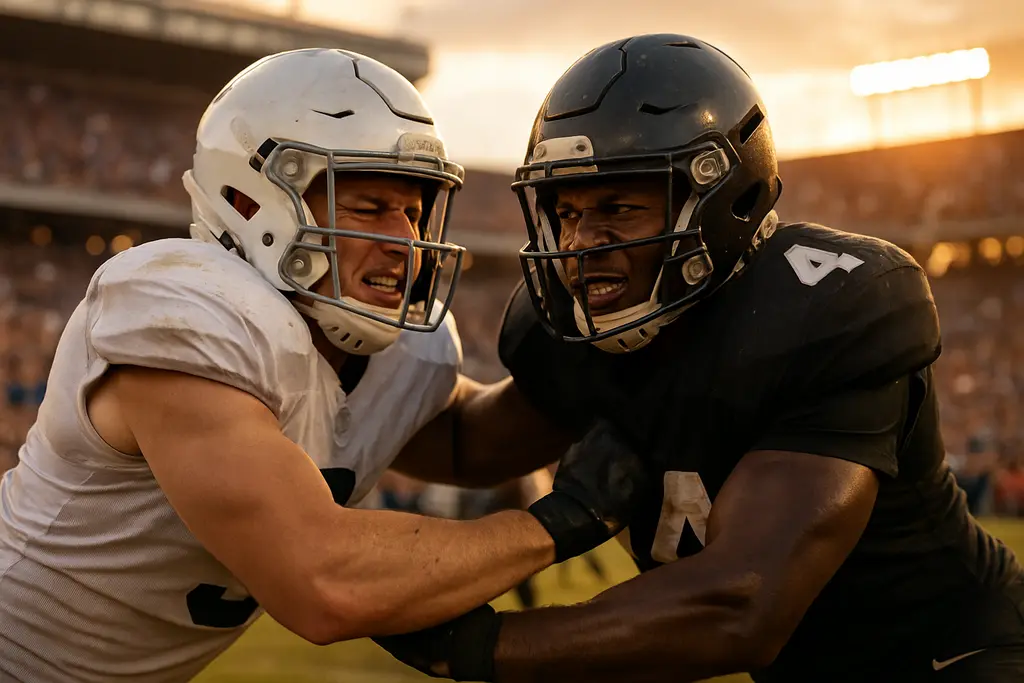
Competitive Balance became more than a talking point after the 2025 NCAA football postseason ended with championship moments that reached far beyond the usual national powers. Indiana winning the College Football Playoff National Championship on January 19, 2026, after a 16-0 season, gave Bloomington a football moment with the kind of permanence usually reserved for basketball banners and old campus legends. The same postseason also put Texas Tech, Duke, and several Group of Five champions into the center of a broader question: how much room is there now for programs that had spent years outside the sport’s loudest championship conversations?
Competitive Balance In The Championship Run
Indiana Turned A Breakthrough Into A Banner
Indiana’s rise was the headline that gave the entire season its lasting shape. On December 6, 2025, the Hoosiers defeated Ohio State 13-10 in the Big Ten Championship Game. The result marked Indiana’s first appearance in the Big Ten Championship Game and its first outright Big Ten title since 1945, according to the research record provided for this report. That alone would have been one of the most important football achievements in school history.
Then Indiana kept winning. On January 19, 2026, the Hoosiers defeated Miami (FL) 27-21 in the College Football Playoff National Championship, finishing 16-0 and claiming the program’s first national football title. That result changed the way Indiana football will be discussed for decades. In a state where high school gyms and basketball lore often shape sports identity, a football championship of that size gives young athletes a different local reference point. It tells linemen, quarterbacks, receivers, and defenders that championship history can be written in places that were not always treated as annual title favorites.
Competitive Balance In Championship Rooms
Competitive Balance did not erase every gap between powerhouse programs and everyone else, but the December 2025 title games showed how quickly a strong roster, belief, and late-season execution can alter a program’s place in the sport. Texas Tech defeated BYU 34-7 on December 6, 2025, to win its first Big 12 title, a championship result also noted in CBS Sports’ 2026 college football stats review. That margin mattered because it was not a narrow escape. It was a decisive title-game performance from a program securing new ground in its conference history.
Duke also added to the season’s shake-up by defeating Virginia 27-17 in the ACC Championship Game on December 6, 2025. The result was described in the research as an upset and one of the more surprising power-conference championship outcomes of recent years. Put beside Indiana’s Big Ten breakthrough and Texas Tech’s Big 12 championship, Duke’s win gave the postseason a distinct character: schools with limited recent championship expectation were not just hanging around. They were lifting trophies.
Campus Communities Felt The Shift
Why Local Pride Changes The Meaning
Championships are measured nationally, but they are lived locally. A first Big 12 title for Texas Tech does not land only in record books; it lands in alumni households, recruiting conversations, campus gatherings, and youth football practices connected to the school’s identity. The same is true for Indiana, where a first national football title created a new story for families that had followed generations of athletes through quieter football years. Duke’s ACC title carried similar force because it placed that program in a championship frame usually dominated by different names.
That local effect is why these results should not be treated as random noise. Championships alter the standard inside athletic departments. They change what former players can say when they return to campus. They give coaches proof to place in front of recruits. They give current players a visible connection to those who came before them. College sports often runs on memory, and the 2025 postseason supplied new memories to communities that had waited a long time for this kind of football celebration.
Group Of Five Champions Added Depth
The surge was not limited to power-conference title games. In December 2025, Tulane won the American, Kennesaw State won Conference USA, Western Michigan won the MAC, Boise State won the Mountain West, and James Madison won the Sun Belt, according to the same CBS Sports review. Those championships deserve attention because they show how many different regions had programs finishing the job in their own leagues.
For Group of Five programs, a conference title can carry heavy meaning even without the same national platform as the College Football Playoff final. It can influence scheduling respect, donor energy, transfer conversations, and how local athletes view nearby schools. Kennesaw State’s Conference USA title, in particular, stood out in the research as part of a wider pattern of programs outside the traditional championship spotlight gaining ground. Boise State’s Mountain West championship fit a different kind of story: a known name continuing to protect its standard while new challengers across the country pushed into the conversation.
Money Still Shapes The Race

The Resource Gap Remained Real
Even after the 2025 season showed fresh championship movement, the financial side of Division I athletics remained a major constraint. The U.S. Government Accountability Office reported that, in the 2023-24 academic year, 352 Division I schools had about $20.8 billion in athletics expenses and $13.1 billion in revenue, while schools in power conferences accounted for over half of both totals GAO college athletics report. Those numbers help explain why one breakthrough season does not mean every program begins from the same place.
Facilities, staff sizes, travel demands, roster support, and athlete services all cost money. A school can win a conference championship because of culture, development, and timing, but staying in that range year after year often requires resources that are not evenly distributed. That is the tension at the heart of the current era: the scoreboard has shown more room for surprise, while the balance sheet still favors the richest athletic departments.
Revenue Sharing Raised The Stakes
The research also notes that the NCAA’s new revenue-sharing model connected to a court settlement allowed institutions to directly pay athletes up to a cap of about $21.3 million for the 2025-26 school year, with athletes also able to benefit from NIL deals. For programs trying to close the gap, that model brought opportunity and pressure at the same time. Schools with deeper revenue streams were better positioned to approach the cap, while smaller programs faced harder choices about how to fund athlete compensation without weakening other parts of their departments.
That financial pressure makes the 2025 championship results even more compelling. Indiana, Texas Tech, Duke, and the Group of Five champions did not remove the resource issue. They showed that smart program building could still produce landmark seasons. The challenge after a breakthrough is often less glamorous than the trophy ceremony: keeping coaches aligned, retaining talent, supporting athletes, and proving that the championship was not a single burst of form.
Why Competitive Balance Matters In NCAA Football
Competitive Balance now feels like a real championship theme because the 2025 season produced examples from several corners of the sport. Indiana’s national title gave the Big Ten another defining moment after the research notes that the league had won national titles three years in a row through the 2025 season. Texas Tech’s first Big 12 title, Duke’s ACC upset, and the Group of Five champions created a wider record of change than one isolated result could provide.
For local sports communities, that matters. Young athletes learn from the teams closest to their families, campuses, and weekend routines. When a program with little recent championship expectation wins a league title or national crown, the impact reaches beyond rankings. It reshapes what players believe is possible at their school. It gives alumni a shared reference point. It gives coaches evidence that development, roster depth, and late-season execution still count.
The next measure is staying power. A single title can enter school history forever, but repeated contention builds a standard. The 2025 season did not prove that every program now has equal footing. It proved that the championship door opened wider than many expected, and that college football’s local communities were ready to carry those moments with pride.