

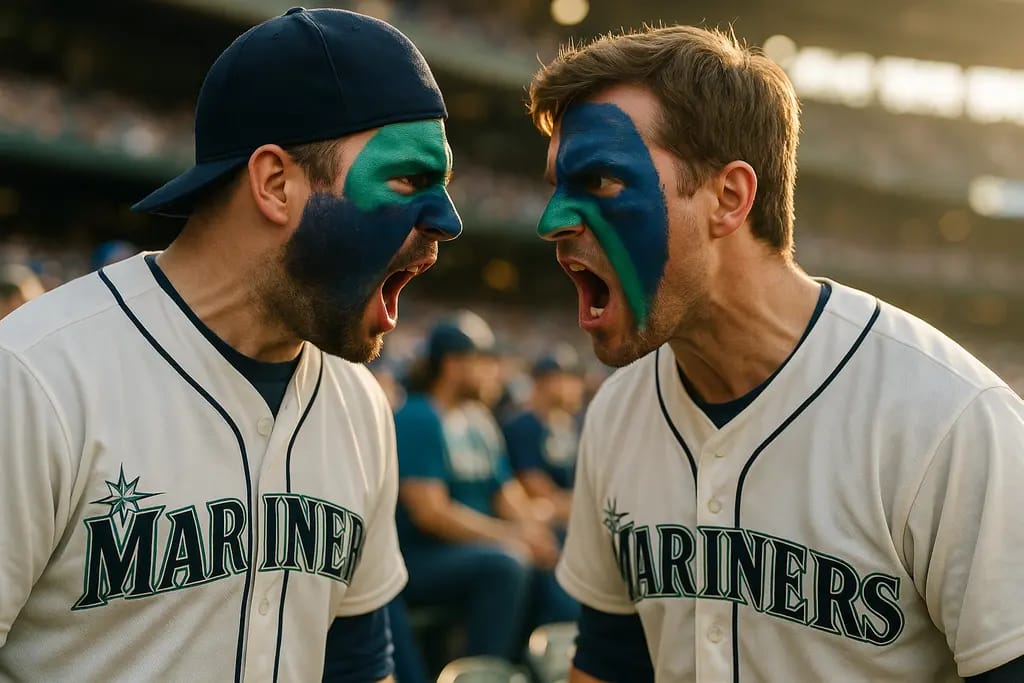
Mariners Rivalries have always carried a special weight in Seattle because they connect the standings, the summer calendar, and the memory of players who helped shape the club’s identity. The Mariners have built those competitive ties across the American League West and, in one unusual case, across league lines with San Diego. Now, as the organization develops one of baseball’s most watched prospect groups, those old matchups offer more than nostalgia. They give young players a first look at what matters to a fan base that remembers division races, tense series, and the long wait for homegrown stars to become local fixtures.
Why Mariners Rivalries Still Matter
Mariners Rivalries As A Teaching Tool
Baseball rivalries are not fixed in stone. They rise when teams meet with something at stake, then soften when the standings pull them apart. For Seattle, that has often meant division pressure. The early 2000s brought regular friction with Oakland and Anaheim, with the Mariners, Athletics, and Angels crossing paths while playoff positioning and division leadership were central to the conversation. Those games helped teach a generation of Seattle fans that the club’s true measuring stick often came from within its own division.
The Houston rivalry belongs to a different era. Since the Astros joined the AL West in 2013, Seattle and Houston have shared the same divisional track. The stakes are clear: every head-to-head series can affect the chase for position, momentum, and clubhouse confidence. Rivalry does not require constant noise. Sometimes it is built through repeated August and September games, pitching matchups that feel heavier than a normal weeknight, and a crowd that understands exactly why the visiting dugout matters.
Rivalries Rooted In The Schedule
Mariners Rivalries also show how geography and scheduling can create different kinds of meaning. The Athletics and Angels have long carried the familiar rhythm of AL West opponents. Houston added a newer division challenge. San Diego is different. The Mariners and Padres play in separate leagues, yet their connection has grown through their shared spring training base in Peoria, Arizona, and the good-natured Vedder Cup label. According to the supplied research, that matchup became officially recognized in 2025, with Seattle winning the inaugural trophy. It is a rivalry with a lighter tone than a division race, but it still gives fans another thread to follow across the season.
Old Opponents And Local Memory
Oakland, Anaheim, And The Early-2000s Lens
The early 2000s still sit close to the surface for many Mariners followers. Seattle’s meetings with Oakland and the Angels were shaped by the standings, which is the oldest fuel in baseball rivalry. The research notes point to the Mariners and Athletics frequently competing for playoff positions and division leadership in that period. The Angels also appear in that same early-2000s frame, with intermittent clashes tied to postseason races. For fans in the Northwest, those games were not just names on the schedule. They carried the feeling that a series in May could matter again in September.
That matters for the current organization because local sports memory is passed down in small ways: a parent telling a child why a trip to see Oakland felt tense, a longtime season-ticket holder remembering the sound of a late rally, or a radio broadcast tying a modern matchup to an older race. Mariners Rivalries survive because people in Seattle keep those stories alive, even as rosters turn over and ballparks change around the league.
Houston And The Modern AL West Standard
Houston’s place in the Mariners’ rivalry picture is tied to the modern AL West. The Astros’ arrival in the division in 2013 gave Seattle another regular opponent in the race for the top of the standings. That kind of rivalry is less about novelty and more about repetition. Clubs see each other often, scouts build deep reports, and young players learn quickly which opposing arms, hitters, and defensive alignments demand sharper preparation.
For a developing roster, those games can be useful markers. A prospect promoted into a division race does not enter a neutral classroom. He steps into a schedule where opposing clubs know Seattle’s tendencies and where fans expect competitive edge. That is why rivalry history and player development belong in the same conversation. The past gives emotional context to the present; the present tests whether the next group can add its own chapter.
Prospect Development Inside A Rivalry Culture
Seven Top-100 Names In The Pipeline
The Mariners’ current prospect story is not vague promise. In January 2026, MLB Pipeline ranked seven Seattle prospects in its Top 100, the most of any team, with Colt Emerson listed first in the Mariners’ system, followed by Kade Anderson, Lazaro Montes, Ryan Sloan, Michael Arroyo, Jonny Farmelo, and Jurrangelo Cijntje MLB Pipeline report. That kind of depth changes how a fan base watches the minor leagues. It also changes how rivalry games are viewed at the major-league level, because each young player represents a possible answer to a divisional challenge.
Seattle has had eras when fans placed hope on one face at a time. This group feels broader. Emerson brings infield attention. Anderson and Sloan give the system pitching names to track. Montes, Arroyo, Farmelo, and Cijntje add different developmental paths. The key point is not to assume outcomes. Prospects still have to adjust, stay healthy, and earn roles. The supported fact is that the Mariners entered 2026 with a large Top 100 presence, and that alone gives the organization a notable foundation.
What Young Players Learn From Familiar Opponents
Rivalries can speed up baseball education. A young hitter facing a division staff sees patterns from game to game. A young pitcher learns which lineups punish mistakes. A young defender hears the crowd react differently when Houston, Oakland, Anaheim, or San Diego is in the building. Those details are not decorations around the sport. They are part of the competitive environment that turns prospect status into major-league routine.
Mariners Rivalries, then, are part of the club’s player-development stage. The organization can promote talent, but the schedule teaches the next lesson. A call-up at T-Mobile Park is one thing. A call-up asked to help win a series with division weight is another. That is where local identity, scouting, and pressure meet.
Colt Emerson And The Fan Response
A Debut That Reached The Ballpark
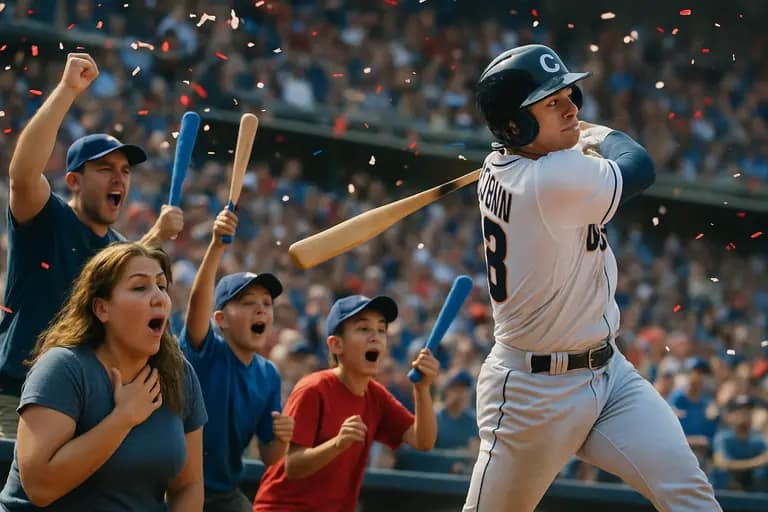
Colt Emerson’s arrival gave Seattle a clear example of prospect hope meeting local feeling. At 20, Emerson made his MLB debut on May 17, 2026, becoming the youngest Mariner to debut since Félix Hernández in 2005, and he received a standing ovation at T-Mobile Park Axios reported. That reaction says something about the way Seattle watches its own. The applause was not only for a name on a lineup card. It was for the possibility that a homegrown player could become part of the club’s next period of contention.
Félix Hernández is the comparison point in the sourced debut fact, and that alone gives the moment gravity. It does not mean Emerson will follow the same path, and fair history should never place a career on a young player before he has built it. Still, Mariners fans understand what it feels like when a young talent arrives early and carries uncommon attention. The standing ovation showed that the community was ready to welcome the next chapter without forgetting the last one.
Why Patience Still Matters
The hardest part of prospect culture is balance. A ranked farm system can build energy, but baseball development rarely follows a straight line. Young players adjust to new pitching, new travel, new scouting reports, and the grind of the major-league calendar. For Seattle, patience will matter as much as enthusiasm. Rivalry games can make every at-bat feel larger, yet the organization’s long-term task is to let talent grow into roles that last.
That is where the Mariners’ history offers a useful reminder. Rivalry heat can define a series, but player development defines seasons. The club’s future will depend on how Emerson and the rest of the group translate talent into reliable production against the opponents Seattle sees most often.
What Mariners Rivalries Mean For The Next Core
Community Memory Meets Player Development
Mariners Rivalries are not just about who Seattle dislikes or who brings the loudest reaction to T-Mobile Park. They are about memory, schedule pressure, and the way young players become known to a city. Oakland and the Angels connect to early-2000s races. Houston represents the modern AL West challenge. San Diego gives the club a cross-league rivalry with a shared spring training connection and a lighter public flavor.
The next Mariners core will be judged in that setting. Emerson’s debut, the Top 100 prospect group, and the club’s divisional history all point toward the same truth: Seattle’s future stars will not develop in isolation. They will grow in front of fans who remember past races and recognize the weight of familiar uniforms across the diamond. If this group becomes what the organization hopes, the old rivalries will gain new names, new moments, and new stories for the Northwest baseball community to carry forward.