

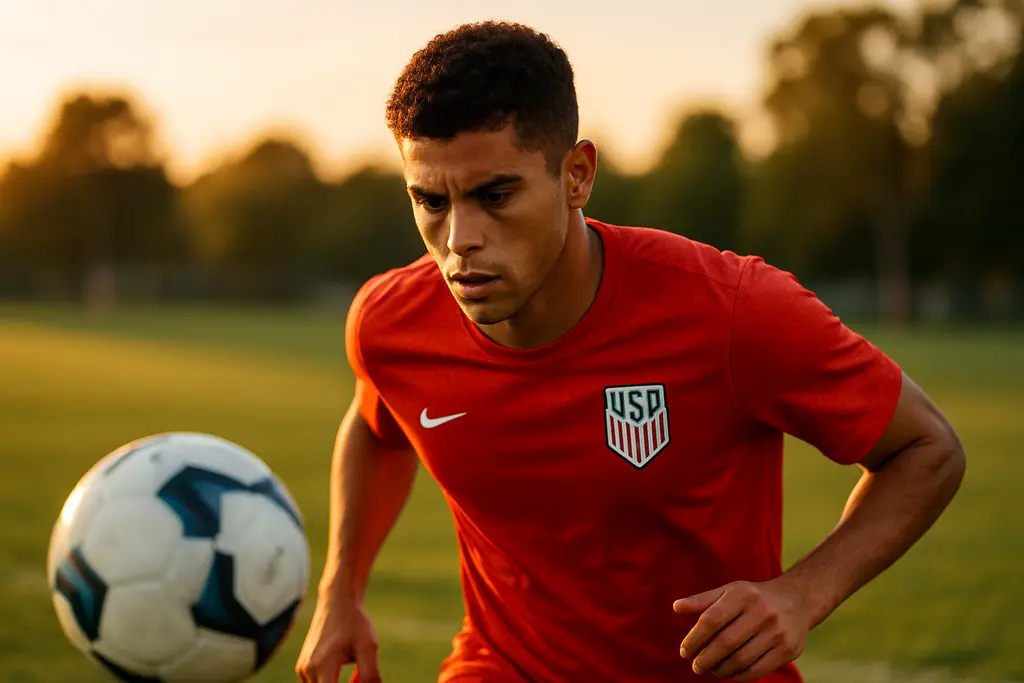
USMNT Rising Stars gave American soccer followers a clear marker in October 2026: the senior national team is being shaped by players who spent key years inside MLS academies, MLS NEXT, and MLS NEXT Pro. In a four-match fall camp that ended with four U.S. wins, 76% of the minutes came from players developed through the MLS Player Pathway, and 21 of head coach Mauricio Pochettino’s 28 rostered players had roots in that same system, according to U.S. Soccer’s fall camp report.
Why USMNT Rising Stars Point Back To MLS
The clearest lesson from the October 2026 window was not tied to one player or one club. It was about structure. American soccer has long searched for a dependable bridge between teenage promise and senior international responsibility. The recent fall camp offered evidence that the bridge is now carrying real weight.
For a local Alabama sports crowd raised on the value of development in high school football gyms, college practice fields, and summer basketball circuits, the idea is familiar. Talent matters, but so does the system that places young athletes into sharper daily competition. MLS academies, MLS NEXT, and MLS NEXT Pro are doing that work in soccer. They are creating more match minutes, more scouting checkpoints, and more early professional tests before a player reaches the senior national team.
The USMNT Rising Stars Benchmarks
The October 2026 figures were hard to ignore. Thirteen players earned their first senior U.S. cap during that window, and 12 of those players had developed within the MLS Player Pathway. USMNT Rising Stars are no longer arriving only after years spent outside the domestic system. Many are being identified, tested, and promoted through MLS-connected environments before they are asked to handle senior international duty.
That matters because first caps are not ceremonial in a competitive national team setting. They test speed of thought, tactical memory, confidence under pressure, and the ability to blend with players from different clubs. A young player who has already dealt with MLS NEXT Pro travel, professional training habits, and first-team expectations may be better prepared for that step.
How The Player Pathway Changed The Roster
The MLS Player Pathway does not promise an easy rise. It gives a player more defined steps. A teenager can begin in an academy setting, face peer competition in MLS NEXT, move into MLS NEXT Pro, and then push for first-team minutes. That structure has become more visible on U.S. Soccer’s senior roster sheets.
Adri Mehmeti’s path, as reported by U.S. Soccer in the October 2026 camp context, shows how young players can move through several layers before gaining national attention. He entered Red Bull New York’s Academy in 2019, later played with New York Red Bulls II in MLS NEXT Pro in 2024 and 2025, captained that side to the 2025 MLS NEXT Pro Cup, then signed a four-year MLS contract and started every league match he had played for Red Bull New York’s first team in 2026.
Why First Caps Matter
A first senior cap often reveals whether a young player can process the match at international pace. Coaches learn quickly who can handle defensive spacing, possession choices, and quick recovery runs. The October 2026 camp placed many new players in that setting, and the MLS development link stood out because most of those debuts came from the same domestic pipeline.
There is a cultural point here, too. In Alabama, player development is often discussed through football recruiting, AAU basketball, and the question of whether a young athlete is ready for the next level. Soccer families can read the October 2026 U.S. camp in a similar way. The academy years matter, but so do the competitive steps after academy play. The pathway works best when each rung asks more of the player.
What MLS NEXT Data Says About Depth
MLS NEXT’s 2026-27 season began on September 3, 2026, and the league’s own figures showed a widening base of players moving upward. At that launch point, 162 MLS NEXT alumni were on MLS first-team rosters, 30 homegrown players had already made MLS debuts during the 2026 MLS season to that point, 483 homegrown players had appeared in at least one regular-season MLS match since the Homegrown Player Rule began in 2008, and homegrown minutes had increased 82% since 2024, according to MLS NEXT’s season announcement.
| Development Measure | Reported Figure | Why It Matters |
|---|---|---|
| Fall camp minutes from MLS Player Pathway players | 76% | Shows heavy senior-team reliance on domestic development |
| Pochettino roster players developed in MLS ecosystem | 21 of 28 | Reflects broad roster influence, not a single-club trend |
| First senior caps from MLS Player Pathway players | 12 of 13 | Shows the pipeline reaching debut-level national team chances |
| MLS NEXT alumni on MLS first-team rosters | 162 | Points to growing professional access for academy graduates |
Homegrown Minutes And First-Team Doors
The increase in homegrown minutes since 2024 is one of the most meaningful signals because minutes are the currency of development. Training with professionals helps, but match time reveals how a player responds when opponents press, adjust, and punish mistakes. The rise in homegrown minutes suggests clubs are not only signing young players; they are placing more trust in them on the field.
That trust can affect the national team pool. A player who has already handled MLS minutes enters a U.S. camp with game evidence attached to his name. Coaches can study how he tracks runners, attacks space, or manages tempo against senior opposition. That makes evaluation more grounded than a projection based only on youth performance.
Why Alabama Soccer Communities Should Care

Alabama’s sports identity has always respected the long build. Whether the conversation starts in a high school weight room, a college practice facility, or a city recreation field, local supporters understand that the best athletes are rarely finished products at 16 or 17. The MLS pathway news should matter here because it gives soccer families a clearer picture of how American players are reaching senior international opportunities.
The state’s soccer parents, high school coaches, club directors, and multi-sport athletes can take a practical lesson from the national trend. Development is not only about exposure. It is about repeatable competition, coaching demands, and the chance to play meaningful minutes against stronger opponents. The national team’s October 2026 roster pattern showed that the domestic system is producing players trusted in a senior U.S. camp.
Lessons For Multi-Sport Families
Many Alabama athletes grow up balancing sports calendars. A young soccer player may also run track, play basketball, or kick for a football team. The MLS development model does not erase that local reality, but it does show what happens when a player eventually enters a focused environment with clear standards.
For families, the useful question is not whether every player will reach MLS or the national team. Most will not. The better question is whether local training habits prepare players for the next serious step. The national pathway’s recent success places value on decision-making, fitness, resilience, and competitive maturity, traits Alabama coaches in every sport have long prized.
What The MLS Pathway Means For USMNT Rising Stars
The October 2026 camp did not settle every question about the future of the U.S. men’s national team. It did, however, give supporters a firm reference point. A large share of minutes, roster spots, and first caps came from players shaped inside MLS-connected development. For USMNT Rising Stars, that means the domestic route has become a serious proving ground rather than a side road.
For Alabama readers, the story is less about distant club branding and more about how American soccer is building its players. The same principles that define respected programs across this state—steady coaching, honest competition, and earning time on the field—are showing up in the national soccer pathway. If the U.S. continues to draw from that base, local soccer communities will have a clearer model for what strong development can look like from youth levels to the senior international stage.