

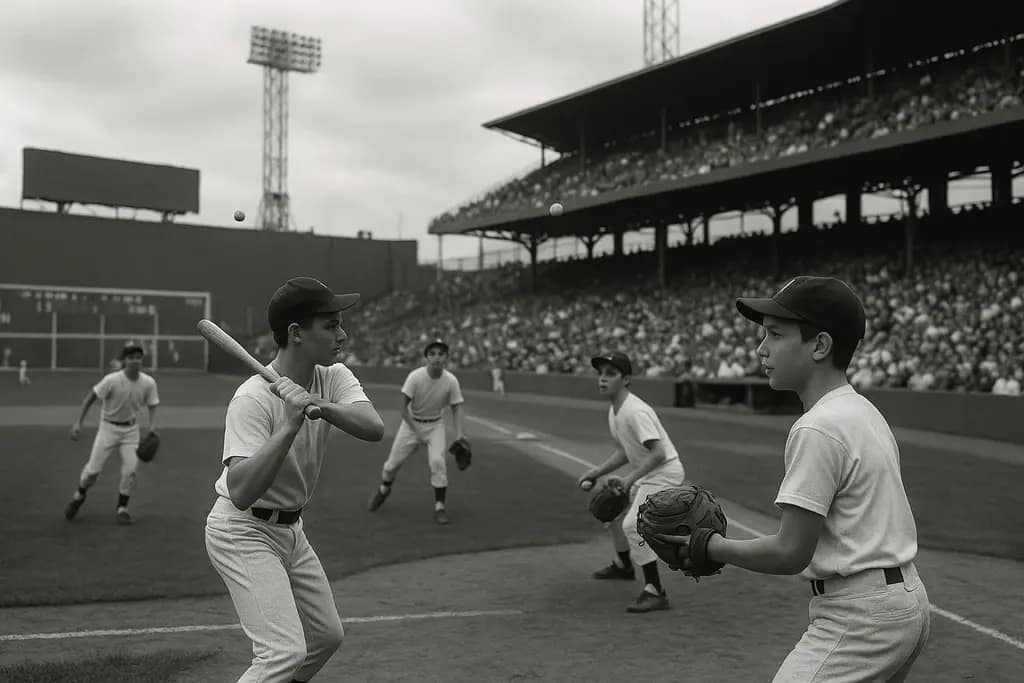
The Futures Game History of Major League Baseball starts with a clear sports promise: place top prospects in a major-league setting during All-Star week and let fans see who might be next. MLB identifies the Futures Game as an event that began in 1999, giving young players a stage connected to the sport’s biggest midsummer gathering MLB Futures Game. Since then, the game has carried meaning beyond a single box score. It has linked ballparks, host cities, farm systems, families, scouts, and local fans who want to spot player development before it reaches the major-league roster.
How Futures Game History Began At Fenway
A Fenway Park Opening Statement
The first game was held on July 11, 1999, at Fenway Park in Boston. The World team defeated the USA team 7-0, and Alfonso Soriano, then representing the New York Yankees, earned MVP honors after hitting two home runs and driving in five runs. That opening result gave the event an identity right away. It was not a quiet exhibition tucked away from the main baseball conversation. It was a prospect game staged in one of baseball’s most recognizable ballparks, with a performance strong enough to be remembered decades later.
Fenway mattered as more than a backdrop. Boston’s baseball identity is built around tight streets, summer crowds, and generational loyalty. Placing the first Futures Game there gave local fans a direct line to the next wave of talent while the sport gathered for All-Star festivities. For younger athletes watching from New England and beyond, Soriano’s MVP performance showed that a prospect stage could feel large, demanding, and deeply connected to major-league ambition.
Why Futures Game History Still Feels Local
Futures Game History often gets told through national prospect lists, but the event is rooted in place. Each host city gives the game its own character. Fenway gave it tradition. Chicago brought it to the South Side in 2003. Anaheim tied it to an Angels setting in 2010. San Diego, Cleveland, Denver, Seattle, Atlanta, and Philadelphia each added a different ballpark rhythm. For local fans, those stops matter because they turn prospect evaluation into a community sports day, not just a scouting report.
Milestones Across Host Cities
Results That Shaped The Event
The official record supplied in the research shows how the game moved across baseball markets and shifted formats over time. In 2003, at U.S. Cellular Field in Chicago, the USA team edged the World team 3-2, with Grady Sizemore of the Cleveland Indians named MVP. In 2010, at Angel Stadium of Anaheim, the USA team beat the World team 9-1, and Hank Conger of the Los Angeles Angels received MVP honors. Those two games stand out because their MVPs were tied to organizations with clear local followings, giving the host-period memory a club-specific layer.
The 2016 game at Petco Park in San Diego went to the World team, 11-3, with Yoan Moncada of the Boston Red Sox named MVP. In 2019, Progressive Field in Cleveland hosted a 2-2 tie, and Sam Huff of the Texas Rangers earned MVP honors. The tie is a reminder that the event’s value has never been limited to a final score. It is also about who handles a bigger stage, which swings travel, which arms show poise, and which players look ready for sharper competition.
| Year | Host Ballpark | Result | MVP |
|---|---|---|---|
| 1999 | Fenway Park, Boston | World 7, USA 0 | Alfonso Soriano, New York Yankees |
| 2003 | U.S. Cellular Field, Chicago | USA 3, World 2 | Grady Sizemore, Cleveland Indians |
| 2010 | Angel Stadium of Anaheim | USA 9, World 1 | Hank Conger, Los Angeles Angels |
| 2016 | Petco Park, San Diego | World 11, USA 3 | Yoan Moncada, Boston Red Sox |
| 2019 | Progressive Field, Cleveland | 2-2 tie | Sam Huff, Texas Rangers |
Format Changes And New Framing
By 2021, the listed matchup had shifted to National League Futures against American League Futures. At Coors Field in Denver, the National League Futures team defeated the American League Futures team 8-3, with Brennan Davis of the Chicago Cubs named MVP. In 2023, T-Mobile Park in Seattle hosted a 5-0 National League Futures win, and Nasim Nuñez of the Miami Marlins received MVP honors. That Seattle stop gave Pacific Northwest fans a rare All-Star week view of national prospect talent inside their own ballpark. Seattle readers following player development can pair that memory with our local look at Mariners prospects after the Futures Game.
What Futures Game History Shows In Host Cities
Seattle, Atlanta, And Philadelphia In Sequence
Recent games in the research keep the local thread strong. The 2023 game at T-Mobile Park belonged to Seattle’s All-Star week setting. The 2025 game was played on July 12 at Truist Park in Atlanta, where the National League Futures team secured a 4-2 victory over the American League Futures team. Josue De Paula of the Los Angeles Dodgers earned MVP honors by hitting a three-run home run. The 2026 game was held on July 12 at Citizens Bank Park in Philadelphia, where the American League Futures team defeated the National League Futures team 6-1, with Nathan Flewelling of the Tampa Bay Rays named MVP.
Those locations matter for how fans experience the event. Seattle’s ballpark gives local supporters and traveling families a chance to judge prospects in a setting built around Mariners baseball. Atlanta brings its own regional pull, with Truist Park serving fans from across Georgia and the Southeast. Philadelphia adds a demanding sports culture where young players can feel the weight of a baseball city that studies effort, edge, and execution. The event may be part of All-Star week, but each stop still belongs to its host community.
Player Development Through A Local Lens
Futures Game History is not only a list of MVPs. It is a record of how clubs, coaches, and scouts value growth under brighter lights. A three-run home run in Atlanta, a shutout-style team win in Seattle, or a lopsided result in Philadelphia can all frame how a player is discussed by fans back home. The same is true for teams with strong regional identity. For Seattle’s longer player-development conversation, our coverage of Mariners rivalries and young stars connects prospect talk to the club’s wider competitive story.
From Showcase Box Scores To Player Development
Why MVP Honors Carry Weight
MVP honors in this game do not guarantee a major-league path, and the research provided does not support claims about every player’s later career. What the MVP list does show is who seized a short, high-visibility window. Soriano’s 1999 performance is clear because the numbers were loud: two home runs and five runs driven in. De Paula’s 2025 award is tied to a three-run home run. Those facts stand out because prospect games are brief. A player may get only a small number of chances, so a single swing or inning can shape how that day is remembered.
For local athletes, that lesson travels well. High school and college players know that showcases, tournaments, and rivalry games can create a similar pressure, even at a smaller scale. The Futures Game sits at the professional end of that idea. It rewards readiness. It also gives fans a respectful reminder that prospects are still developing, still adjusting, and still trying to turn tools into reliable baseball performance.
A Respectful Reading Of The Record
The research covers selected years rather than every edition, so the fairest reading is a layered snapshot instead of a full record book. That snapshot is still useful. It begins with a World team shutout in Boston, runs through close games and one-sided results, includes a tie in Cleveland, and continues into the National League versus American League Futures framing. The pattern shows continuity: top young talent, a major-league ballpark, and an All-Star week audience ready to learn names before they become familiar on nightly broadcasts.
Why Futures Game History Matters To Local Fans
Futures Game History matters because it brings baseball’s player pipeline into public view. A fan in Boston in 1999, Chicago in 2003, Seattle in 2023, Atlanta in 2025, or Philadelphia in 2026 could leave the park with a sharper sense of what the sport is building next. The event also gives families and young players a visible bridge between minor-league work and major-league opportunity.
That is the lasting value of the Futures Game. It honors development, not just arrival. It lets local baseball communities host the next wave for an afternoon, then send those names back into the season with a little more attention and a little more meaning. For a sport that measures time in generations, that kind of prospect stage helps connect ballpark memories to the athletes still working toward their biggest chapter.