

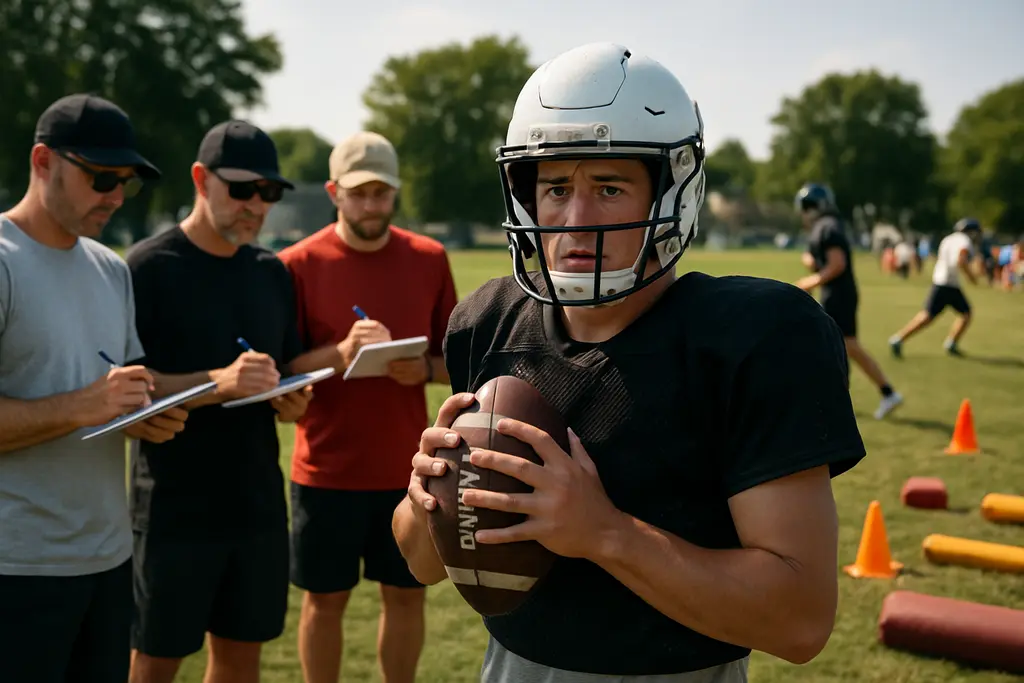
The FCS Football Calendar became a serious player-development story after the NCAA FCS Oversight Committee approved legislation on September 1, 2026, to modify the football calendar, with the package tied to Division I Cabinet action scheduled for October 6-7, 2026, according to the NCAA football calendar announcement. As of October 18, 2026, the research provided for this article does not confirm the Cabinet outcome, so the fairest reading is to treat the details as committee-approved or scheduled where the NCAA materials specify future effective dates. For Alabama families, high school coaches, and FCS staffs recruiting the state, the practical question is not abstract. It is how fewer preseason practices, new out-of-season periods, shorter transfer timing, and later written offers could affect a local player trying to move from Friday night football into a college program.
Why The FCS Football Calendar Matters Locally
A Calendar Issue With Locker Room Consequences
Football calendars can sound like paperwork until they reach the practice field. In communities where a senior season carries family pride, school identity, and college opportunity all at once, timing matters. The NCAA model described in the research allows FCS schools to hold two out-of-season practice periods that combine for 21 on-field practices. Each period may last no more than five weeks, and the total may not exceed seven weeks. The same model requires at least nine weeks to be discretionary or voluntary, with no required athletically related activities during that time.
That balance speaks directly to athlete development. A young lineman, defensive back, or quarterback coming out of a local high school program often needs strength work, classroom adjustment, film habits, and position coaching before he is ready to help on Saturdays. More spread-out practice time can give coaches a better chance to teach, but the protected voluntary weeks may also help players recover and handle academics. In Alabama, where the sport often sits at the center of school and community life, the better calendar is the one that gives a recruit room to grow without turning every month into another grind.
What Coaches Can Teach Outside The Season
The out-of-season structure could give FCS coaches a clearer teaching plan. Instead of stacking too much instruction into one spring block or relying heavily on preseason, staffs may be able to separate installation, fundamentals, and evaluation across two windows. That matters for local athletes who arrive with different high school backgrounds. Some come from programs with advanced weight training and passing concepts. Others have raw ability but need college-level footwork, terminology, or special teams exposure.
The NCAA stated that the changes are intended to give schools more flexibility for coaches and student-athletes. Flexibility alone does not develop a player, but it can help a staff plan more responsibly. A small-college coach recruiting in Alabama may now think harder about when a freshman needs live reps, when he needs individual instruction, and when he needs time away from required football activity. Readers tracking the same issue from a development angle may also find our related local discussion of local athlete growth useful, especially for how rest periods and practice timing can shape the first year on campus.
Practice Windows And Player Development
Shorter Preseason Raises The Value Of Preparation
Starting with the 2027 season, the preseason practice period is scheduled to be shortened to 27 calendar days for 21 practices. The research notes that this is down from the previous model of 25 practices over a longer period. That change will place a premium on what happens before players report. For incoming freshmen, especially those coming from nearby high school programs, the summer habits they bring to campus may carry more weight.
In older football terms, preseason once served as a long sorting ground. Coaches could use repeated practices to see which freshmen could handle the speed, contact, and meeting-room load. A 21-practice preseason narrows that runway. The player who already knows how to study film, maintain conditioning, and handle position-specific drills has a better chance to compete early. The player who needs a long adjustment period may still develop, but his margin for missed details becomes slimmer.
Rest Weeks Are Part Of Development Too
The nine required discretionary or voluntary weeks may be just as meaningful as the practice count. Development is not only built through contact. It is built through recovery, nutrition, academic footing, and maturity. Local athletes making the jump from high school to FCS football often face a new level of independence. They are no longer only representing a hometown school on Friday night; they are managing college schedules, travel, training demands, and competition from older players.
The calendar’s protected voluntary periods can give athletes a defined break from required football activity. That does not mean players stop training. It means the official structure recognizes that young bodies and minds need pauses. For families who have watched a player go from youth football to varsity snaps with little downtime, that part of the proposal may be easy to appreciate. The tradition of tough football in Alabama has always prized work, but the best coaches have also known when a player needs to heal, study, and reset.
Recruiting Timing For Local Families

FCS Football Calendar And Senior Offers
The research also notes a significant high school recruiting change: the first date that prospective FCS student-athletes can receive written offers of financial aid, or settlement-related benefits, shifts from August 1 before senior year to November 15 of senior year. For a local senior, that alters the emotional rhythm of the fall. Instead of entering the season with certain written offers already allowed under the prior timeline, some prospects may play most of their senior campaign before that written offer date arrives.
That can create pressure, but it can also give coaches more senior film before formalizing parts of the recruitment. A player who grows between August and November may benefit from a longer evaluation period. A late-blooming linebacker, a quarterback in a new system, or an offensive lineman who adds strength during the season could have more live evidence in front of FCS staffs. At the same time, families may need steady guidance from high school coaches because verbal interest and written financial aid timing are not the same thing.
Transfer And Evaluation Windows
The January notification-of-transfer period is also being shortened. Beginning with the first business day after January 1, the window is set to run 10 days instead of 15. That matters to high school recruits because transfer movement can affect available roster spots. A shorter period may force FCS staffs to make quicker roster assessments while still communicating with high school prospects.
Starting January 1, 2027, FCS institutions are also scheduled to use a recruiting person-days model with modifications to evaluation days, off-campus recruiting contacts, and evaluations, as reflected in LSDBi Proposal No. 109426. In plain football language, recruiting time is being organized differently. For Alabama high school coaches, that may mean college staffs become more selective with visits and evaluations. A prospect’s verified film, grades, measurements, and communication with coaches could carry even more value because staff time will be managed under a different model.
- Out-of-season work: two periods, 21 total on-field practices, and no more than seven total weeks.
- Voluntary time: at least nine weeks with no required athletically related activities.
- Preseason in 2027: 27 calendar days for 21 practices.
- January transfer timing: 10 days beginning with the first business day after January 1.
- Written offer timing: November 15 of senior year under the research provided.
What The FCS Football Calendar Means For Alabama Prospects
Why Local Development May Depend On Communication
The FCS Football Calendar changes place more responsibility on communication among college staffs, high school coaches, players, and families. A recruit should know which dates are evaluation periods, which dates affect offers, and how transfer timing can influence roster needs. High school coaches may become even more valuable as translators of the process, especially for families going through college football recruiting for the first time.
The most grounded way to view these changes is through the daily life of the athlete. A senior trying to earn an FCS opportunity needs honest feedback, clean film, steady academic progress, and a training plan that does not burn him out before graduation. A freshman entering an FCS program in 2027 will face a shorter preseason, structured out-of-season instruction, and protected voluntary weeks. Those details do not guarantee development, but they do shape the conditions under which development happens.
Alabama football has long been built on local trust: the high school coach who knows a player’s habits, the family that travels on Friday nights, and the college assistant who returns to the same communities year after year. If the NCAA framework is applied with care, it could help FCS programs teach more deliberately and give local prospects a clearer path from senior season to college readiness. If communication lags, the same calendar could confuse families who are already trying to sort dates, offers, and roster movement. The calendar is not the story by itself. The story is how well the people around the athlete use it.