

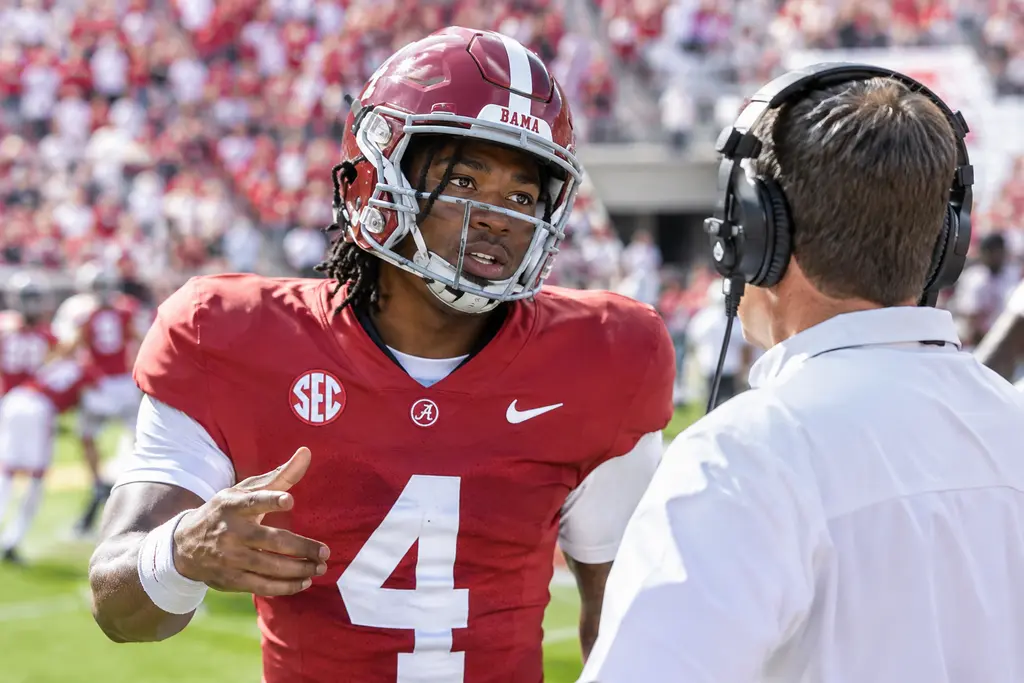
Keelon Russell has moved from preseason question to one of Alabama football’s central stories through eight concluded games of the 2026 season. As of games played through October 24, 2026, the Crimson Tide quarterback had paired productive passing numbers with enough mobility to change how defenses treated Alabama on early downs, in the red zone, and in scramble situations.
Keelon Russell At The Eight-Game Mark
The numbers from the first two months gave Alabama fans a clear starting point for judging his rise. Through eight games, Russell had thrown for 2,057 yards on 221 attempts with a 67.0 percent completion rate, 15 touchdowns, and five interceptions. His passing average sat at 257.1 yards per game, while his passer rating stood at 163.04. Those figures mattered because they came in a role that carries unusual weight in Tuscaloosa: the Alabama quarterback is judged not only by statistics, but by command, composure, and how well he keeps the offense on schedule.
His running production also changed the feel of the offense. Russell had added 251 rushing yards and five rushing touchdowns across those same eight games. That did not make Alabama a quarterback-run offense, but it did give the Tide a pressure valve. When protection bent or coverage won early, he had enough burst to turn a stalled snap into positive yardage. For an offense working through the first half of a conference schedule, that trait helped keep Alabama from becoming too dependent on one style of play.
Keelon Russell In Alabama Wins
The split that best framed his early value came in Alabama’s wins. In six victories, he had been credited with 1,725 passing yards, 14 touchdown passes, and three interceptions, while completing nearly 69.8 percent of his throws, according to StatMuse splits. That is the type of production Alabama has long expected from its best quarterbacks: efficient enough to protect the team, aggressive enough to stretch the field, and steady enough to let the rest of the roster work.
First-Half Scoring Pace
Another important detail was where many of his touchdowns came. Ten of his 15 touchdown passes had come before halftime, a sign that Alabama was getting early returns from scripted calls, opening-drive rhythm, and favorable down-and-distance work. The same split also showed four first-half interceptions, so the story was not spotless. It was a young quarterback’s profile: strong production, real spark, and a few decisions that coaches could use as teaching points during film review.
The South Carolina Game That Announced The Leap
If one performance gave the wider SEC audience a clear view of Russell’s ceiling, it came on September 26, 2026, against South Carolina. In Alabama’s 49-18 victory, he completed 21 of 27 passes for 365 yards and four touchdowns, a 77.8 percent completion rate, as shown in his CBS Sports game log. That line did more than fill a box score. It showed timing, trust in receivers, and a willingness to take throws that punish hesitation from defensive backs.
Alabama supporters have seen plenty of quarterbacks post big numbers in games that got loose early. What made this one stand out was the level of control. Russell’s throws were not simply the product of broken coverage or late-game padding. The completion rate and touchdown total pointed to a passer who was reading leverage, getting the ball out on time, and letting Alabama’s skill players finish the play. In a town that remembers every quarterback debate, that kind of afternoon has a way of staying in the local conversation.
Explosive Plays Without Losing Shape
The deep ball also became part of the early-season picture. His longest completion was 75 yards, and throws of 20 yards or more had contributed to his yardage and scoring totals. The value of that threat was not limited to the catch itself. Safeties had to respect the vertical shot, linebackers had to hold their landmarks a beat longer, and Alabama’s underneath routes gained more room. For a quarterback still building week-to-week habits, that vertical element helped widen the field.
Road Tests Against Georgia And Tennessee
The rise also included reminders of how unforgiving SEC road football can be. In tougher matchups against Georgia on October 10, 2026, and at Tennessee on October 17, 2026, his passing efficiency dropped compared with his best outings. The research notes point to lower yardage per attempt and more conservative production in those games. That does not erase the season start; it gives it shape. Alabama quarterbacks are remembered for how they respond after the league takes away first choices, closes windows, and forces longer drives.
Alabama Context For A Young Quarterback
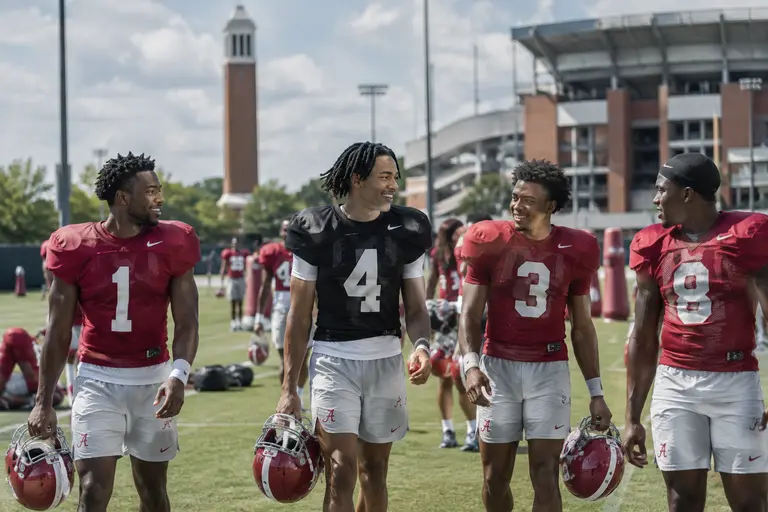
Quarterback play at Alabama carries a public weight that few college roles match. Every promising start is measured against past title runs, rivalry scars, and Saturday habits that stretch across families in Birmingham, Mobile, Huntsville, Montgomery, and the small towns that fill Bryant-Denny Stadium. Russell became the starter at the beginning of the 2026 season after a fall camp competition, and that timing made his early work especially meaningful. He was not inheriting a quiet job; he was taking the wheel of one of the sport’s most watched offenses.
For readers tracing how he reached this point, our earlier look at the Keelon Russell Journey placed his move into the starting role in the broader Alabama quarterback pipeline. That background matters because the Crimson Tide’s best passers have often grown through pressure before they became polished leaders. The first signs are not always perfect. Sometimes they show up in protection calls, third-down patience, or the choice to take a short throw instead of forcing a hero ball into traffic.
The Local Quarterback Standard
Tuscaloosa has a long memory for quarterbacks who win with different styles. Some were pocket distributors. Some made their mark with arm strength. Some carried the offense with late-game calm. Russell’s early profile blended several pieces: accurate enough to sustain drives, mobile enough to punish open grass, and explosive enough to make defensive coordinators account for the whole field. The local standard is not built on one afternoon, though. It is built across rivalry games, road environments, and the steady work of protecting possessions.
That is why the five interceptions through eight games deserved context rather than panic. The total showed that there were decisions to clean up, especially because four of those interceptions came before halftime. Yet his touchdown production and completion rate showed that Alabama was still getting strong value from his aggression. Young quarterbacks often have to learn the difference between confidence and risk. Russell’s start suggested he was already giving Alabama enough positive plays to make that teaching process productive rather than disruptive.
Why Keelon Russell’s Start Matters In Tuscaloosa
The first eight games of 2026 placed Keelon Russell in a meaningful spot in Alabama’s season story. He had not finished the job, and no honest reading of October football should pretend otherwise. What he had done was give the Crimson Tide a credible passing foundation, a red-zone running option, and a South Carolina performance that showed how high the offense could climb when rhythm, protection, and receiver separation lined up.
For Alabama fans, the next measure was less about labels and more about habits. Could he protect the ball earlier in games? Could he lift efficiency when road defenses forced shorter throws? Could the offense keep its deep threat without asking him to chase low-percentage plays? Those questions were fair, and they were the right ones for a quarterback whose rising status was built on real production rather than empty praise. In Tuscaloosa, promising starts are remembered, but growth across the hard middle of the schedule is what turns a good season into a lasting place in Alabama football memory.