

Unity Bowl Hawaiʻi gave Lahainaluna High School and Paradise High School a football night that carried more weight than a final score. On Saturday, September 5, 2026, Lahainaluna hosted Paradise at Sue D. Cooley Stadium in West Maui, with kickoff set for 6:00 p.m. HST, according to Hawaii News Now. By the end of the night, Lahainaluna had a 27-21 win, Paradise had completed a meaningful trip from California, and two school communities had shared a stage shaped by fire, football, and recovery.
How Unity Bowl Hawaiʻi Reached Lahaina
Why Unity Bowl Hawaiʻi Fit Lahainaluna
The matchup was built around the theme “Two Towns, One Spirit.” That phrase fit the night because it connected two places known far beyond their own campuses for painful reasons. Paradise, California, was devastated by the Camp Fire on November 8, 2018. Lāhainā was hit by the August 2023 Maui wildfires. The research available on the event frames the game as a meeting of teams whose communities had lived through separate wildfire disasters, not as a standard nonleague road trip.
For Lahainaluna, the setting mattered. Sue D. Cooley Stadium sits in the school community that became a gathering point for people trying to keep normal school rhythms alive after loss. A home football game in that setting is never just a home date on a schedule. It is band members, classmates, families, volunteers, coaches, and alumni sharing space around a team that has long carried pride for West Maui.
The Unity Bowl Hawaiʻi idea began in 2024, when Paradise athletic director Jerry Cleek reached out about a home-and-home series. That origin matters because it shows the event was not built as a one-night tribute alone. The plan also included Lahainaluna returning the visit to Paradise in 2027, making the connection between the schools a continuing football relationship rather than a single ceremony.
A Football Date With Community Purpose
The sports structure remained simple: Lahainaluna against Paradise, under the lights, with a 6:00 p.m. local kickoff. The meaning around it was larger. The game brought together players who could recognize parts of each other’s experience even if their towns, states, and daily routines were different. That is rare in high school athletics. Most intersections between programs are built around rankings, rivalries, or travel tournaments. This one centered on young people meeting peers who understood displacement, grief, and the long work of returning to school life after disaster.
Game Night At Sue D. Cooley Stadium
Score, Crowd, And Setting
Lahainaluna defeated Paradise 27-21, and the win was Lahainaluna’s first of the 2026 season. About 1,900 people attended the game at Sue D. Cooley Stadium. Those numbers tell a sports story on their own: a close six-point result, a home team breaking through, and a crowd large enough to give the event the feel of a shared town gathering.
In a high school football context, a 27-21 result usually points to a game with tension deep into the night. The research does not provide drive charts, player statistics, or quarter-by-quarter scoring, so the safest reading is not to invent a turning point. What can be said is that the final margin allowed the competitive part of the night to stand on its own. This was not only a ceremony wrapped around a game. It was a real contest between two programs carrying the weight of their communities.
A Visiting Team With A Parallel Story
Paradise’s trip to Maui also came with major logistical needs. Aaron Rodgers, through his Fire Recovery Fund, donated $15,000 to help the Paradise High School football team travel to Maui for the game. Paradise had sought to raise $72,000 in total for expenses. For a high school program, that kind of travel is not routine. It asks families, school leaders, donors, and athletic staff to align around a purpose larger than a single road game.
The presence of public leaders at the game also reflected how widely the night was viewed. U.S. Senator Mazie Hirono, Congresswoman Jill Tokuda, and Maui County Mayor Richard Bissen were among the public figures at the event. A video from Hirono and California Senator Alex Padilla emphasizing shared trauma was shown before kickoff. Those details placed the teams inside a broader civic moment, while the athletes still had to handle the actual football demands on the field.
Healing Across Two Fire-Affected Football Towns
Shared Meals And Shared Loss
The event did not end with the last whistle. After the game, the two teams, coaches, families, and supporters shared a lū‘au dinner together on Sunday night as part of the Unity Bowl events. That gathering may have been just as meaningful as the game itself. Football brought the schools together, but the meal gave students and families time to speak, listen, and see one another away from the scoreboard.
The Maui context remains heavy. On August 8, 2023, wildfires struck Maui, with Lāhainā hit especially hard. The disaster killed 102 people, destroyed or severely damaged around 2,200 structures, and caused an estimated $5.52 billion in damages, according to the state presentation on the August 2023 Maui wildfires. Those figures do not capture every family story, but they explain why a football game in Lāhainā carried deep local meaning on September 5, 2026.
Paradise’s history with the Camp Fire brought another layer. The November 8, 2018 fire claimed 85 lives, destroyed or damaged more than 18,000 structures, and displaced more than 50,000 people. The visiting team did not arrive as outsiders to loss. Paradise came from a town that knew the long recovery after a fire becomes part of school identity, family schedules, and athletic life.
Players Meeting Players Who Understood
One of the strongest details from the research is the role of Lahainaluna senior captain Ma‘a Tevaga, whose family home was destroyed in 2023. He spoke of pride, resilience, and mutual support. That kind of voice matters because healing events can sound abstract until a student-athlete gives them a face. A captain speaking from personal loss turns a ceremonial phrase into something grounded in a locker room, a household, and a school day.
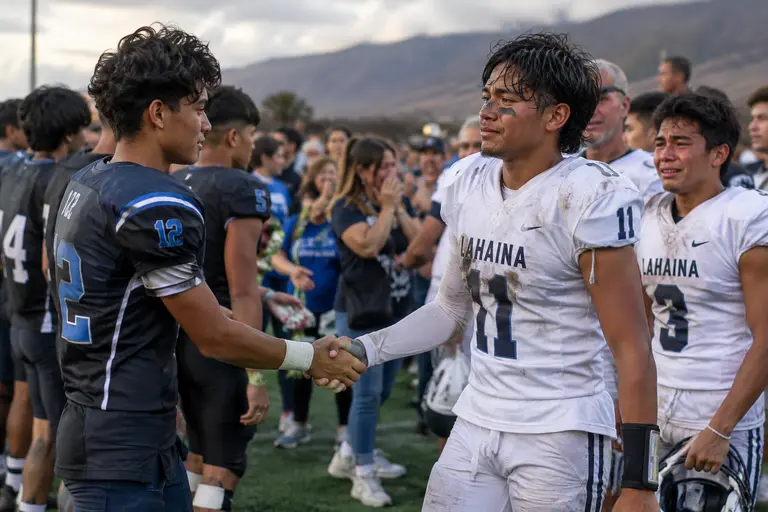
For both teams, the Unity Bowl Hawaiʻi created a rare kind of opponent relationship. Paradise and Lahainaluna were not only trying to block, tackle, and execute under pressure. They were also standing across from players who understood how wildfire can interrupt childhood, sports routines, and community landmarks. That shared understanding made the handshake line and postgame gathering part of the event’s sports value.
Why The Unity Bowl Hawaiʻi Still Matters Locally
A Return Trip Still On The Calendar
The planned return game in Paradise in 2027 gives this story a second chapter, though details beyond the plan should be treated with care until they are formally set. If the visit happens, Lahainaluna players and families will have a chance to step into Paradise’s recovery story the way Paradise stepped into Lāhainā’s. That would make the series a true exchange between communities, not a one-direction gesture.
For Hawaiʻi high school sports, the Unity Bowl Hawaiʻi showed how a football schedule can hold local memory without losing its competitive edge. Lahainaluna earned a 27-21 win, celebrated its first victory of the 2026 season, and hosted a visiting program with a parallel story of loss. Paradise made a major trip, represented its town, and joined West Maui in a public moment of respect.
That is why the game should be remembered in sports terms and community terms at the same time. The scoreboard mattered because the athletes trained for it. The attendance mattered because families and supporters filled the setting. The shared meal mattered because recovery is not limited to speeches before kickoff. Unity Bowl Hawaiʻi became a reminder that local sports can give young people a field, a crowd, and a reason to feel seen after events far outside their control.