

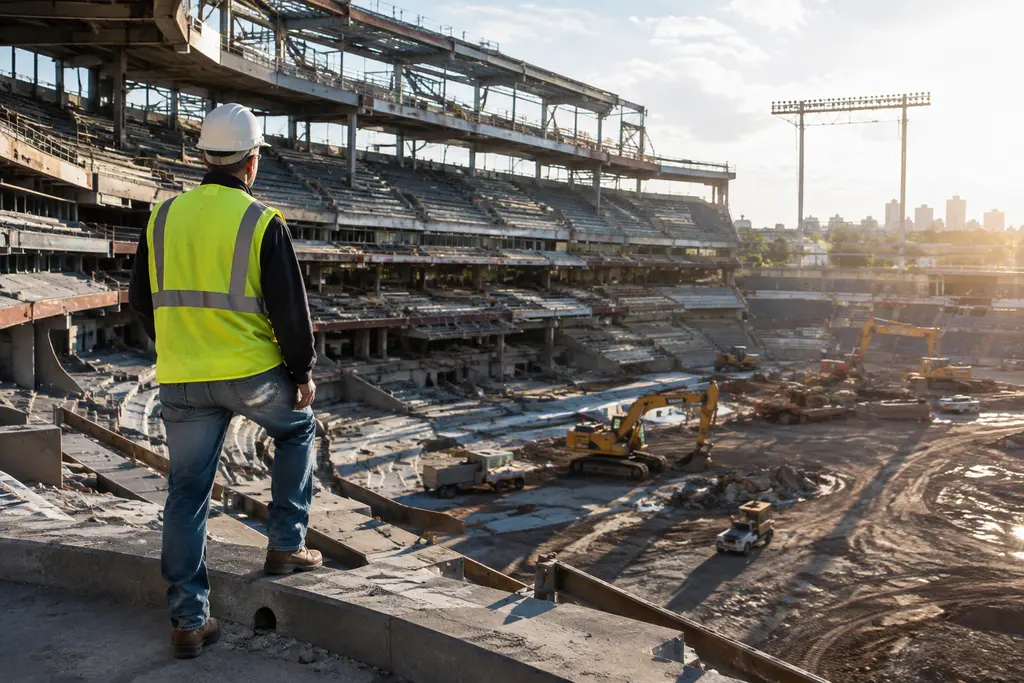
Veterans Memorial Stadium entered a new chapter on September 9, 2026, when Long Beach City College held the formal groundbreaking for its $250 million Stadium & Athletic Sports Complex, marking the official start of construction according to the LBCC groundbreaking announcement. For Long Beach athletes, coaches, families, and alumni, the project is not just a building program. It is a reset for one of the city’s central athletic gathering places, with real effects on football Fridays, college game days, track training, graduations, and community ceremonies.
Veterans Memorial Stadium And A Necessary Reset
What Closed Before The Rebuild
The old stadium closed on August 30, 2026, after a final run of events that carried deep local meaning. Long Beach Poly played among the last high school games there on August 28, and the final LBCC Vikings football game took place on August 29. Those dates matter because the venue had been in use since 1950, long enough for generations of families to connect the same concrete, bleachers, lights, and press box silhouette with their own school years.
Before Veterans Memorial Stadium closed, its condition had become part of the public case for replacement rather than another patchwork repair. Reports cited crumbling concrete, holes in the press box, and other aging concerns that raised safety questions. That kind of wear carries a sports cost. Coaches need dependable practice and competition space. Athletic trainers need modern support areas. Families need access that feels safe and clear on crowded nights. A venue can hold memory and still reach the point where a new structure is the responsible path.
Veterans Memorial Stadium In Community Memory
The stadium’s meaning has never belonged to one team alone. LBCC football, local high school programs, track athletes, graduates, and civic groups all used the site. Long Beach Poly’s connection stands out because of the school’s football tradition and the size of crowds the venue could draw. In 2001, the stadium hosted its first nationally televised high school football game, with more than 17,000 spectators reported in attendance. That figure helps explain why this rebuild feels larger than a campus project. It touches the city’s sports identity.
What The New Athletic Complex Adds
Facilities Built Around Daily Use
The new plan covers nearly 18 acres and brings together outdoor and indoor athletic space. The new Veterans Memorial Stadium plan includes a 10,000-seat outdoor stadium, a 2,500-seat indoor arena, football, soccer, and track & field facilities, basketball and volleyball courts, athletic training and sports medicine areas, classrooms, offices, concessions, and a Hall of Champions.
- A 10,000-seat outdoor stadium for major field events and community gatherings.
- A 2,500-seat indoor arena that can serve basketball, volleyball, and campus events.
- Training, sports medicine, classrooms, and office space tied directly to athlete support.
- Concessions and a Hall of Champions to connect game-day use with local memory.
That mix is important for a city where athletic facilities serve more than varsity competition. A football stadium may draw the loudest crowd, but the daily value often comes from practice schedules, injury treatment, classroom use, and youth exposure to college-level spaces. For LBCC, the project can support recruiting and retention by giving student-athletes a home that matches the demands of modern training. For high schools, it preserves the idea that major local games can still be staged in Long Beach rather than pushed outside the community.
Historic Care And Environmental Commitments
Preserving Familiar Features
The design is expected to honor parts of the old stadium’s appearance and memory. Plans call for preserving familiar elements such as bleachers and the iconic press box look, while recycled concrete from demolition is set to be reused. A Veterans Green plaza is also planned as a tribute area. Those details are not small gestures for longtime Long Beach sports followers. Stadiums are remembered through sightlines, walking routes, sound, and the habits people build around them.
The project is funded through Measure LB, the bond measure approved in 2016, and is being designed to achieve LEED Gold certification. In practical terms, that goal points toward stronger energy performance, lower environmental impact, and healthier indoor spaces. For a facility expected to serve athletes and students for decades, sustainability is not separate from sports planning. Heat, air quality, lighting, and utility costs all affect how a campus athletic center functions.
How The Public Record Frames The Loss
The historical record also makes clear that replacement carries a cost. A 2024 survey found the stadium eligible for listing in the National Register of Historic Places under Criterion A and in the California Register of Historical Resources under Criterion 1, while the CEQA review expected an adverse impact on the historic resource, according to the state environmental report. That finding gives the rebuild a serious frame. Long Beach is not simply trading old for new. It is losing a recognized historic athletic site while trying to carry forward visible reminders of what stood there.
Temporary Homes For Teams And Fans

St. Anthony Partnership Keeps A Local Base
During construction, LBCC partnered with St. Anthony High School so Viking football and track & field teams had a temporary Long Beach site for 2026 home games and practices. St. Anthony’s stadium seats 1,200, a much smaller setting than the old facility, so the arrangement changes the rhythm of game days. Smaller venues can bring spectators closer to the field, but they also require careful planning around crowd size, parking, team operations, and school-day activity.
For players, the biggest issue is routine. Athletes build their weeks around locker access, meeting rooms, treatment schedules, and practice timing. Any move asks coaches and support staff to keep those routines steady. For families, the question is simpler but still meaningful: where do we park, how far do we walk, and how early do we need to arrive? Those are everyday concerns, yet they shape how a temporary season feels.
Access And Student Movement
The construction period has also affected campus movement. Research noted that the closure of much of the stadium parking lot increased walking distances for some students by roughly 1,460 steps, leading to calls for improved transit or accommodations during hot weather. That detail connects the rebuild to a larger campus question. Athletic construction affects athletes first, but it also reaches students who may never attend a game. Good communication, clear routes, and attention to heat exposure can help keep the project from feeling distant from daily student life.
Why Veterans Memorial Stadium Still Anchors Long Beach Athletics
A Rebuild Measured By Community Use
The target opening for the new complex is summer 2029, with demolition and preparation work expected to begin in November 2026. Between those dates, Long Beach will judge the project in stages: how well temporary homes work, how clearly the college communicates access changes, and how faithfully the new design honors the old venue’s public meaning.
If Veterans Memorial Stadium is remembered only as concrete and seating capacity, the city misses the point. Its value came from shared nights under the lights, school pride, local rivalries, and the sense that Long Beach athletes had a central stage. The rebuild’s success will depend on whether the new complex serves that same purpose for LBCC, Poly, track athletes, indoor sports, graduates, and families who still see sports as one of the city’s common meeting grounds.