

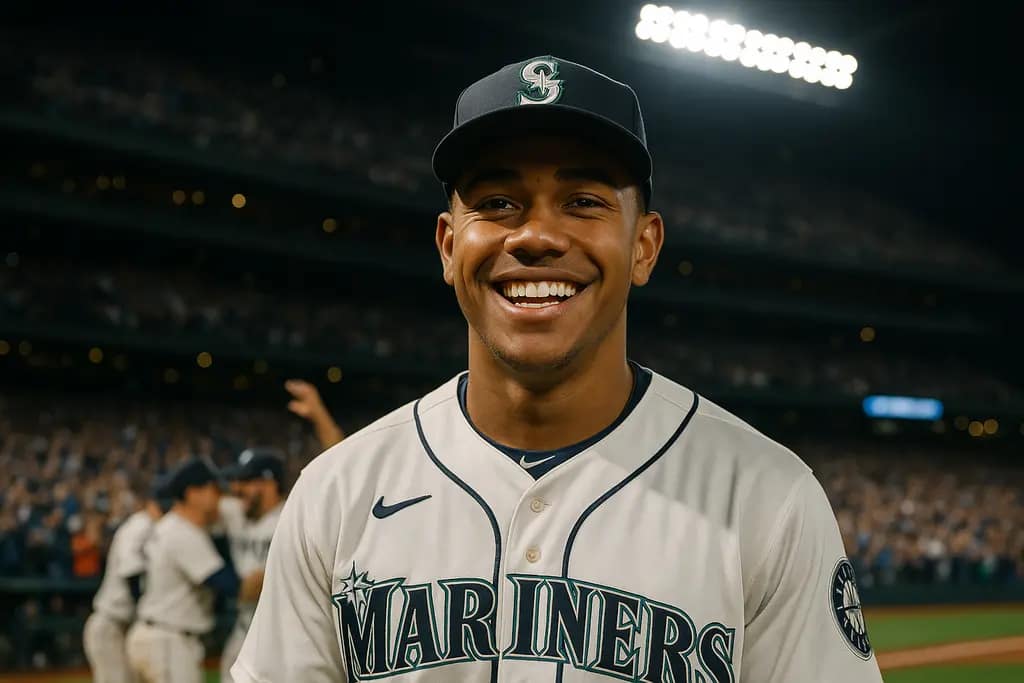
Mariners Prospects Kade Anderson and Ryan Sloan gave Seattle supporters a clear, compact snapshot of the organization’s pitching future at the MLB All-Star Futures Game on July 12, 2026. Each worked a scoreless inning for the American League team, a detail that matters because the Futures Game is less about box-score volume and more about how elite young players handle a national showcase against other high-end talent, according to the Futures Game report.
Mariners Prospects On A National Stage
Mariners Prospects Set The Tone
The Futures Game can be a brief assignment, but brevity does not make it small. A single inning can reveal tempo, mound presence, strike-zone intent, and how a pitcher responds when the setting is bigger than a standard minor league night. Anderson and Sloan did not need long outings to make their point. Scoreless work from both pitchers gave the Mariners a clean public marker for two arms already drawing attention within the system.
For a franchise and fan base that has often tied identity to pitching, those innings fit a familiar Seattle conversation. The Mariners have built many of their best stretches around run prevention, starting pitching, and player development. No Futures Game appearance should be treated as a guarantee, but it can confirm that a prospect is being measured against the right peer group. Anderson and Sloan were not simply mentioned as distant names; they were placed in a showcase designed for players with a possible major league path.
Why Scoreless Innings Travel Well
A scoreless inning in this setting carries more weight than a routine minor league line because the opposing hitters are also selected for their standing in the sport. The event does not settle who is ready for Seattle, nor does it answer how quickly either pitcher should move. It does, though, offer scouting value. The Mariners can compare their internal reports with what the pitchers showed under brighter attention, away from the rhythms of a normal Double-A schedule.
That is the main reason this performance has staying power. The immediate result was tidy, but the larger value sits in confirmation. Anderson and Sloan had already earned the Futures Game invitation. By posting scoreless innings, they added a visible layer to the development file. For Seattle, that is useful because pitching depth often gets tested over a long season, and the club’s best internal options are watched closely well before a call to the majors is realistic.
Arkansas Development And The Seattle Timeline
Kade Anderson’s Standing In The System
Anderson’s appearance carried extra weight because of his standing outside the organization as well as within it. He has been recognized as the best pitching prospect in baseball by MLB Pipeline, and his season at Double-A Arkansas has been described as dominant in the available reporting from Cascadia Sports. That combination changes the tone around any public outing. When a pitcher with that label throws in the Futures Game, the outing becomes part of a broader evaluation of how his minor league performance might translate.
Double-A is often where organizations learn whether a pitcher’s strengths hold up against hitters with better plans and fewer chase swings. The research supplied here does not provide Anderson’s full statistical line, so it would be wrong to dress up the case with invented numbers. What can be said is that his assignment at Arkansas, his recognition by MLB Pipeline, and his scoreless Futures Game inning all point in the same direction: he is one of the central arms in Seattle’s player-development story.
Ryan Sloan’s Next Test
Sloan’s case matters for a slightly different reason. He shares the Arkansas stage with Anderson, and the research points to impressive performance there, along with anticipation about his eventual arrival in Seattle. That does not mean a firm promotion date should be assumed. Pitching development is rarely a straight line, and clubs protect young arms with workload, command, health, and role questions all in view. Still, the Futures Game gave Sloan a chance to be seen beside other leading prospects, and he matched the assignment with a scoreless inning of his own.
For Mariners Prospects such as Sloan, the development question is not only whether the raw ability shows up. It is whether the pitcher can repeat quality work in different settings. A scoreless inning in a showcase does not replace the daily grind at Arkansas, but it strengthens the case that his progress deserves attention. Seattle’s evaluators will keep weighing the steadier evidence from minor league starts and appearances, yet public moments like this help supporters understand why his name is gaining traction.
What The Futures Game Signals For Roster Depth
The Value Of A Two-Pitcher Showcase
One prospect having a good Futures Game outing is encouraging. Two pitchers from the same organization doing it on the same stage says something broader about depth. The Mariners did not receive a long look at either arm, but they did receive two clean innings from two players already placed near the front of the development conversation. That matters in a season because major league pitching plans can be altered by workload, performance swings, and the normal strain of a long schedule.
The strongest farm systems give a front office more choices. They allow a club to be patient with some players while still preparing others for a future need. Based on the research provided, Anderson and Sloan are both working at Double-A Arkansas, both drew Futures Game selection attention, and both delivered scoreless innings in the showcase. That is enough to frame them as important arms without pretending the next step is already decided.
Why Seattle Will Watch Closely
Seattle’s interest goes beyond one July exhibition. Mariners Prospects who perform in national prospect events often become part of the everyday conversation around roster planning, even if their next assignments remain in the minors. Supporters track them because they represent possible answers to future pitching needs. Coaches and player-development staff track them because each outing adds information about command, confidence, and readiness for a higher challenge.
There is also a community piece to this. Minor league development connects fans across club affiliates and back to the major league park. A strong outing in a national event can send more eyes toward Arkansas results and create a clearer link between summer prospect coverage and the long-term roster in Seattle. The Mariners’ public identity benefits when young pitchers are not abstract names but players with visible performances against top competition.
What Mariners Prospects Mean For Seattle
The impact of Anderson and Sloan’s Futures Game performances should be read with care. The outings were short. The setting was a showcase. The available research does not confirm a promotion schedule, a major league debut date, or a guaranteed 2026 role. What it does confirm is meaningful: both pitchers were selected for a premier prospect event, both represented the American League team on July 12, 2026, and both delivered scoreless innings.
For a Seattle audience, that is enough to make Mariners Prospects a central storyline in the months ahead. Anderson’s standing as a highly regarded pitching prospect and Sloan’s rise at Arkansas give the organization two arms worth following with patience rather than hype. Their Futures Game work did not finish the evaluation. It gave the Mariners, and the people who follow them closely, another reason to believe the next wave of pitching talent is moving in the right direction.