


Georgia high school football has spent much of 2026 showing how quickly a coaching change can become a community story. By Oct. 15, 2026, the preseason hiring rush had already moved from transaction lists to Friday night evidence: new staffs trying to rebuild belief, set standards, and give players a clearer reason to stay committed when the scoreboard has not yet caught up.
Georgia high school football Finds New Coaches
A Statewide Reset Before Kickoff
The scale of the reset was hard to miss. In late May 2026, The Atlanta Journal-Constitution reported that Georgia had 94 head coaching openings and that 91 had been filled by that point, leaving only a small number of programs still searching for leadership state coaching openings. That kind of movement is not just an administrative shuffle. In high school sports, the head coach often becomes a bridge between the locker room, the classroom, the booster club, and families who measure progress in more than wins.
For programs trying to recover from losing seasons or staff turnover, the first task has been setting a shared language. New coaches have leaned on core values, strength-room expectations, and basic practice habits before asking young rosters to deliver in close games. That approach sounds familiar to anyone who has watched a basketball coach rebuild a gym culture: before the press works and before the shots fall, players have to trust the routine.
South Georgia Staffs Start With Belief
South Georgia offered a clear example of that reset before the 2026 season. WALB’s August 2026 season preview reported that 12 new head coaches were entering the season across the region, including programs such as Bainbridge, Monroe, and Early County South Georgia preview. The common thread in that coverage was not a promise of instant wins. It was the demand that players first believe the message, then master the practice habits that support it.
That order matters. A new coach can install formations in a week, but a team identity takes longer. The research from those August previews points toward coaches asking for buy-in before system fluency: showing up, lifting with purpose, learning assignments, accepting correction, and treating the program as something larger than one varsity roster.
Culture Before Scores
Georgia high school football And The Buy-In Test
The buy-in test is especially clear at schools coming off difficult stretches. Lithonia’s turnaround under Kevin Barnes is one of the strongest examples in the 2026 notes. Barnes was hired in 2024, and the Bulldogs rose from a one-win season in 2023 to a 10-win season in 2025. By August 2026, the program’s next step was tied to higher expectations, weight-room accountability, and a culture that asked players to carry themselves differently after a breakthrough.
For Georgia high school football, that kind of shift is rarely private. Parents see it in how players arrive home after practice. Teachers see it in whether athletes respond to structure during the school day. Younger players see whether the varsity group treats lifting, film, and conditioning as chores or as the price of belonging. In towns and neighborhoods where the football field is a weekly gathering place, the coach’s message spreads well beyond the sideline.
Alumni Roots And Community Memory
One 2026 theme with deep local meaning was the number of coaches returning to their alma maters. The research notes identify 10 head coaches hired in the 2026 offseason who returned to coach at schools they once attended, with Gabe Gay at Montgomery County and Rance Morgan at Clinch County among the examples. That matters because alumni coaches usually arrive with a shorter introduction period. They know the rivalries, the expectations, the family names, and the way pride can either lift a program or weigh on it.
Those homecoming hires also show why football rebuilds share DNA with college programs trying to regain local trust. The same local stakes show up in Atlanta college football, where Clark Atlanta football rebuild coverage has centered on roster change, recruiting, and community pressure. At the high school level, the scale is smaller, but the emotional investment can be just as personal.
Strategies Showing Up On Practice Fields
From Weight Rooms To Fourth Down Choices
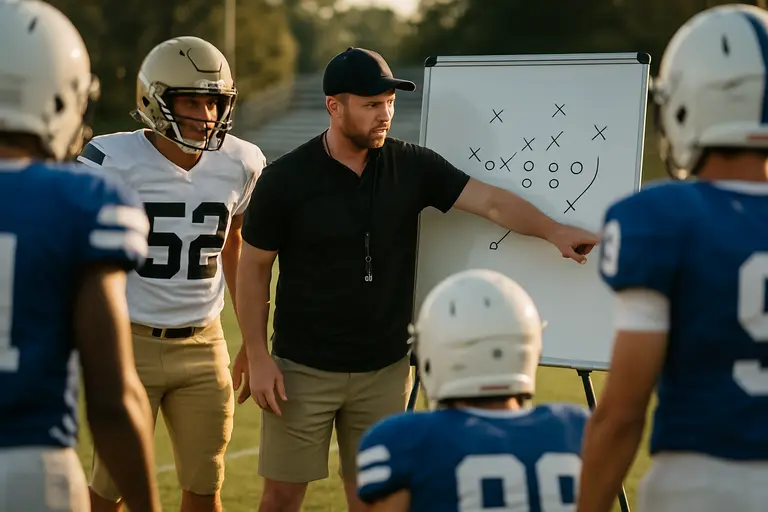
The most useful resilient coaching strategies in the 2026 examples are practical rather than theatrical. Coaches have pushed players toward the weight room, simplified expectations, stressed fitness, and set clearer consequences for missed details. In Class A Region 2, the research notes point to four new head coaches across five programs entering the 2026 season, with new identities built around core values and mindset shifts. One coach introduced a BITE mentality: Bold, Invested, Tough, Excellent. The phrase works because it gives teenagers a handle they can remember under stress.
Heritage High in Conyers gave another early-season example on Aug. 21, 2026, when first-year head coach Quincy Carter led the program to a 38-14 win over Cedar Shoals. The research notes credit bold play-calling, multiple formations, and a successful fourth-and-13 as part of that first victory. The point is not that every rebuilding coach should chase risk. It is that a new staff sometimes has to show players that the old emotional limits no longer apply.
Incremental Progress Over Instant Repair
Patience remains the hardest sell. Locust Grove’s recent arc in the research notes showed how growth can be uneven. The program finished 2025 at 9-2 and won its first region title in school history, though that title was later forfeited due to GHSA violations. With Anthony Williams coming in as the new coach, the supported story is less about a clean upward line and more about continuity, defense, and protecting progress after a turbulent chapter.
Terrell County carried a different kind of challenge. After a 1-8 record in 2025, the school hired Art Anderson in July 2026. The notes describe Anderson as a former middle school coach, which suggests a developmental lens: teach the basics, meet players where they are, and build from the bottom of the roster instead of only the top. Dutchtown’s 2025 example also fits that patient model. A new coach returned just one starter from a previous 7-5 team, went 2-6, and emphasized fundamentals, fewer mental mistakes, and fewer penalties as signs of repair that may not show immediately in the record.
- Start with belief and shared language before judging the win total.
- Use the weight room, film habits, and attendance as daily culture markers.
- Lean on community knowledge, especially when alumni coaches return home.
- Accept that roster turnover may require position changes and slower growth.
- Make selected bold calls to help players feel a clean break from losing habits.
What Georgia high school football Rebuilds Mean Locally
Why These Rebuilds Carry Past Friday Night
The revival of Georgia high school football programs under new coaches is not one story with one formula. Lithonia’s rise, South Georgia’s staff turnover, Heritage’s opening win under Quincy Carter, and Terrell County’s reset after a 1-8 season all point to different starting points. What connects them is the belief that the coach’s first job is to restore the daily contract between players and program.
That contract is local. It shows up when a freshman sees a senior lift after practice, when a parent hears the same standards repeated at home, and when a school begins to feel that football is not just filling a schedule but teaching follow-through. By Oct. 15, 2026, the full record of these coaching hires had not been written in the supported research. Still, the early evidence is clear enough: the strongest rebuilds are not selling quick rescue. They are asking communities to value structure, patience, and the slow return of pride.