

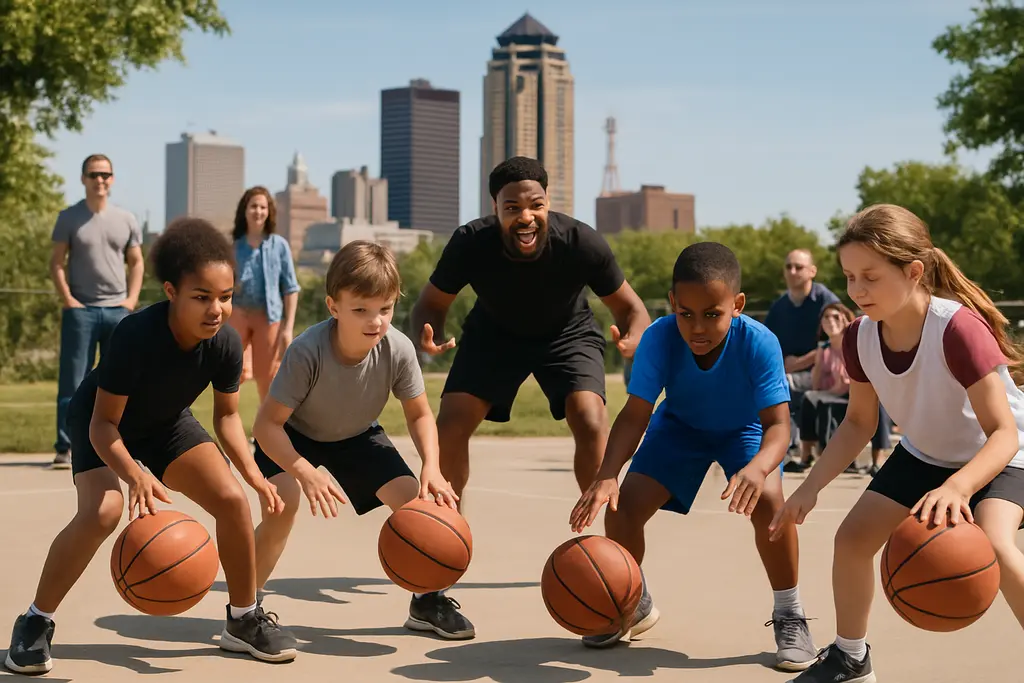
Iowa United Basketball has moved from a promising prep basketball idea into a larger Des Moines sports project with real facility investment, a selective player model, and a scholarship structure that puts athlete development at the center. On October 2, 2026, the program announced plans to expand its south-side campus by investing millions of dollars into a private outdoor recreation and training area, according to Axios reporting. For a city that has long measured basketball growth through school gyms, AAU weekends, and family travel schedules, the plan gives Des Moines a bigger place in the prep hoops conversation.
Iowa United Basketball Expansion In Des Moines
What Iowa United Basketball Announced
The October 2, 2026 announcement centered on expansion at the Des Moines campus, not on a distant concept or a loose recruiting pitch. The plan called for a private outdoor recreation and training area tied to the program’s existing prep basketball operation. Axios also reported that a previously described “outdoor training area” was no longer part of the current strategy, so the exact shape of the buildout deserves careful wording. What is clear from the available reporting is that the organization planned a multimillion-dollar investment connected to its campus and athlete environment.
That distinction matters locally. Des Moines families, coaches, and school communities tend to judge sports projects by what they actually provide: gym time, coaching access, academic support, safe housing, strength work, and a schedule that prepares athletes for college-level demands. The new plan sits inside that practical frame. It is not only a basketball story; it is also a facility story, a player-development story, and a community-resource story on the south side of the city.
A South-Side Campus Near The Airport
The program began operating classes at its new Des Moines campus in late August 2025, after an announcement made on August 26, 2025. The facility is described in the research record as a renovated 73,000-square-foot warehouse near the Des Moines airport. That location carries sports value beyond square footage. Airport access helps with team travel, visiting coaches, tournament movement, and the out-of-town rhythm that elite prep basketball often requires.
Inside the campus, the reported setup includes full basketball courts, a performance training center, locker rooms with digital displays, turf training spaces, weight rooms, and dedicated team areas. Six four-bedroom apartments were also being built for students who had been living off-campus in Des Moines. Those details point to a model that tries to bring school, training, housing, and team life closer together. In Alabama, where I have spent years writing about the pull of high school gyms and college recruiting routes, that kind of setup always changes the daily routine. Less time lost to scattered logistics can mean more time spent on skill work, recovery, tutoring, and team standards.
How The Prep Model Shapes Player Development
Small Roster, Large Investment
The program maintains a highly selective roster of 24 student-athletes, according to the research provided. Founder Mark Scharnberg of Katecho has stated that the program invests about $150,000 per athlete per year, while all students receive full scholarships despite the school being described as the state’s most expensive high school. Iowa United Basketball is therefore built on a narrow roster rather than a mass-participation model.
That approach has strengths and tradeoffs. A small roster can allow more individualized coaching, clearer development plans, and direct accountability. It can also raise questions for the wider basketball community about access, selection, and how many local players benefit from the investment. Based on the information available, the program’s stated structure is scholarship-based for its athletes. That matters because the cost of high-level travel basketball can put a heavy burden on families. A full-scholarship prep structure changes that equation for the players selected, even if the total number of roster spots remains limited.
Academic Support Alongside Court Work
The research notes that, as of fall 2024, student-athletes held an average grade-point average of 3.46 or higher, supported by academic services and dual-enrollment options. That figure cannot tell the whole story by itself, but it does signal that the academy model is not being presented only as a training facility. In prep basketball, the academic side is often where long-term outcomes are decided. A prospect with athletic gifts still needs transcripts, eligibility, class discipline, and the habits that travel with him after the final buzzer.
The competition model also appears demanding. The research describes roughly 70 games per year across PREP Academy and AAU competition, split evenly between 35 PREP games and 35 AAU games. That kind of schedule can give athletes more exposure, but it also places pressure on recovery, school planning, and coaching oversight. The presence of training rooms, weight areas, team spaces, and housing becomes more than a luxury in that setting. It becomes part of keeping the schedule from wearing down the player before he reaches the next level.
Financial Signals Behind The Community Project
What The FY2024 Filing Shows
The public nonprofit filing gives one snapshot of the organization’s early financial structure. Iowa United Basketball reported about $3.8 million in FY2024 revenue and about $920,000 in expenses, with $795,000, or roughly 86 percent, spent on program services, according to its FY2024 nonprofit filing. The remainder was listed for management and general costs.
For readers who follow local sports organizations, those numbers matter because facilities, coaching, housing, travel, and scholarships do not run on slogans. They require sustained funding. A program can make headlines with a new gym or a major campus plan, but the community impact depends on whether the operating model supports students year after year. The FY2024 filing does not answer every future question, and it should not be stretched beyond what it shows. It does, however, indicate that program services represented the large majority of reported expenses in that filing period.
Why Des Moines Will Watch The Spending
Des Moines has a practical sports culture. Families understand the value of a good coach, a reliable court, and a safe place for teenagers to build habits. They also understand that private sports investment can sit at a distance from the public school world unless relationships are handled with care. The reporting available does not establish formal links with local high schools, public recreation programs, or city-run sports initiatives. Any claim beyond that would be speculation.
Still, the campus itself changes the local sports map. A 73,000-square-foot basketball and training facility near the airport can attract attention from athletes, families, visiting teams, and college recruiters. It may also place more eyes on Des Moines as a prep basketball stop. The deeper question is how that attention connects back to the city: local employment, facility use, youth inspiration, neighborhood activity, and the standard it sets for training environments in Iowa.
Community Impact Beyond The Court
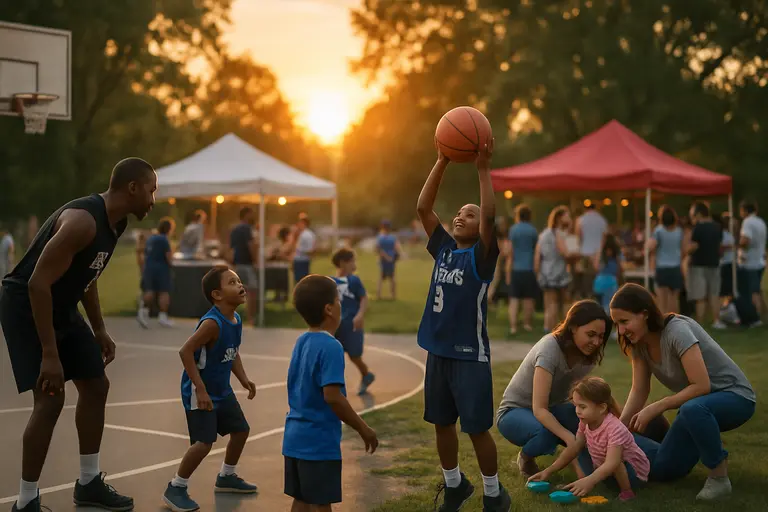
Training Space As A Local Sports Asset
The strongest community argument for the expansion is not simply that better players may train there. It is that a serious basketball campus can raise expectations around preparation. Young athletes notice where older players train. Parents notice whether academics are treated as part of the plan. Coaches notice whether strength work, film habits, housing, and daily structure are being taken seriously.
In Alabama basketball and football towns, that pattern has repeated for generations. A facility does not guarantee character, wins, or scholarships. But a well-run place can give coaches and families a clearer standard to point toward. Des Moines now has a prep basketball program attempting to build that kind of standard through a small roster, full scholarships, concentrated facilities, and a stated commitment to development.
Questions That Remain Fair To Ask
The available research leaves several points unresolved. It does not provide a full construction timeline for the newly announced expansion. It does not clarify public access, if any, to the planned private outdoor recreation and training area. It also does not establish how the academy’s growth will connect with existing school basketball programs, youth leagues, or city recreation efforts.
Those questions should be asked respectfully because the stakes are real. Prep basketball can open doors for selected athletes, but local sports identity is built by more than elite rosters. It is built by families driving to practices, middle-school coaches teaching fundamentals, weekend tournaments filling gyms, and high school rivalries that carry neighborhood pride. If Iowa United Basketball continues to grow, its lasting value will be judged not only by the prospects it develops, but by how its presence fits into that wider Des Moines basketball culture.
What The Expansion Means For Iowa United Basketball
The October 2, 2026 expansion announcement placed Iowa United Basketball firmly in the conversation about how elite prep basketball can be built outside the traditional coastal and southern recruiting centers. The program’s model is ambitious: a small scholarship roster, a major campus near the airport, housing in progress, extensive training space, and a schedule designed for high-level exposure. Those pieces give Des Moines a notable role in the prep development lane.
The fairest reading is also the most grounded one. The project has promise, but its long-term impact will depend on execution, transparency, academic follow-through, financial stability, and community connection. In a sports town, buildings earn meaning through the athletes, coaches, teachers, and families who use them well. If the expansion strengthens those relationships, it could become more than a private training project. It could become a marker for how Des Moines invests in future basketball talent while keeping the local community in view.