

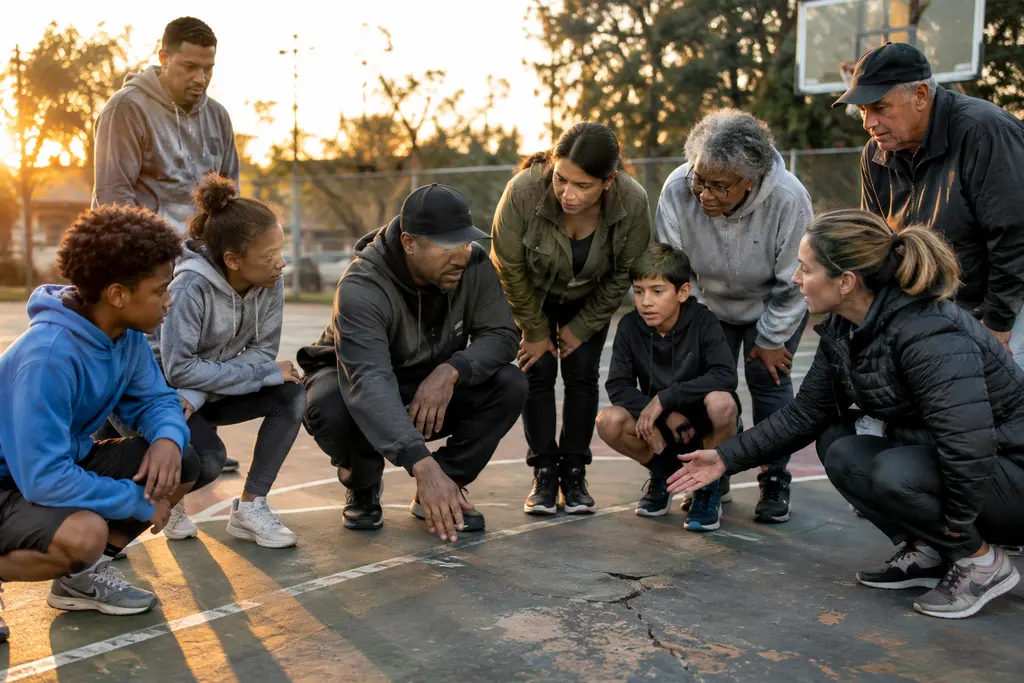
Local sports infrastructure is never just a construction story. It is a story about who gets a court, who gets a safe field, which families can gather close to home, and whether a city treats sports as part of civic life. Across recent 2026 facility projects, the most useful pattern has not been size alone. It has been community support: public funding, nonprofit partners, donated land, foundation gifts, and local leaders choosing sports spaces that serve athletes beyond one scoreboard.
That lesson travels well to Alabama, where high school gyms, college practice fields, municipal recreation centers, and tournament sites often carry family memory across generations. A new building may look like steel and concrete, but the real question is whether it gives coaches better teaching space, young athletes more dependable access, and fans a place where community identity can keep growing. Recent projects in Oklahoma City, Springfield, Casa Grande, San Francisco, Frederick, Castle Rock, and other communities show how the same principle keeps surfacing: the best sports facilities are backed by people who expect them to serve more than one team.
Why local sports infrastructure Needs Community Backing
How local sports infrastructure Starts With Shared Use
Shared use is the common thread in many recent facility enhancements. In Casa Grande, Arizona, the Phoenix Suns/Phoenix Mercury Foundation donated a full court to The Opportunity Tree on May 1, 2026. The nonprofit serves people with intellectual and developmental disabilities, and the new mini-stadium replaced a parking-lot hoop while supporting basketball, volleyball, and pickleball for more than 250 members. That sort of project matters because it brings organized play into a setting where access can be the difference between occasional recreation and regular participation.
San Francisco’s Herz Recreation Center, opened on January 9, 2026, followed a different path but pointed toward the same goal. Built in John McLaren Park as the city’s first ground-up recreation center in more than 25 years, the 11,500-square-foot building includes a full-size basketball court with 200-seat bleachers, multipurpose rooms, wellness spaces, and a kitchen. Its partnerships with HOPE SF, Mercy Housing, and Related CA show how recreation can sit beside housing, neighborhood services, and youth activity rather than standing apart from them.
Public Trust Comes Before New Walls
For local officials, facility work asks for public trust before it asks for a ribbon cutting. Residents want to know whether the project will be used, who will have access, and whether the price fits the community’s needs. That is why the funding mix matters. Some projects lean on bond programs, some on state investment, some on county government, some on college foundations, and some on private donations. Each source carries a public expectation that the finished site will bring real activity back to the neighborhood.
Sports towns understand that better than most. A gym can become the winter meeting place. A softball park can host grandparents, travel teams, and college scouts in the same weekend. A track can serve school meets, community walkers, and athletes trying to earn one more chance at the next level. For readers who follow how facility dollars reach younger athletes, our piece on athletic facility grants fits the same conversation about access, safety, and long-term participation.
Devon Park Shows What A Practice Site Can Mean
Softball Gains Year-Round Training Space
Oklahoma City offered one of the clearest examples of local sports infrastructure tied to a sport’s identity. On June 16, 2026, the Oklahoma City Council approved final plans for an approximately $25.4 million indoor softball practice facility at Devon Park, funded through the city’s 2025 Bond program, according to the city approval. The planned 30,000-square-foot building includes two indoor infields, locker rooms, sports medicine areas, and other support spaces.
That matters in softball because practice quality often depends on weather, field conditions, and reliable indoor space. A city with national softball ambitions cannot treat training areas as an afterthought. Devon Park already carries meaning for the sport, and the indoor project was designed to support Olympic and national softball activities. At the time of approval, groundbreaking was planned for fall 2026, with construction expected to take about 18 months.
Why Bonds Tell A Sports Story
A bond-funded sports facility reflects a public choice. The community is not simply buying a building; it is setting a priority. In Oklahoma City’s case, the project speaks to softball as an economic and cultural asset. Athletes get a better preparation setting. Event organizers gain a stronger training base. Families and visitors see a city reinforcing a sport that already brings people together.
There is an Alabama parallel in the way communities rally around sport-specific places. A practice field, batting cage, or indoor gym rarely gets the same attention as a packed stadium on game night, but player development happens in those quieter hours. Coaches know that repetition, recovery space, and dependable surfaces shape the athlete long before the public sees the result.
Springfield’s Arena Investment Keeps A Team Connected
MassMutual Center Gets A Five-Year Commitment
Springfield, Massachusetts, supplied the arena side of the story. On July 30, 2026, Governor Maura Healey announced a $93 million investment in Springfield’s MassMutual Center, with upgrades over the next five years aimed at safety, accessibility, visitor experience, concessions, and event capabilities, according to the state’s MassMutual Center announcement. The project was also tied to support for the Thunderbirds and regional economic growth.
Arena work carries different pressure than a neighborhood court or practice complex. It must serve fans, teams, concert promoters, operations staffs, concessions workers, and nearby businesses. For the Thunderbirds, facility upgrades can help protect the bond between team and city. Fans may remember scores and playoff runs, but they also remember whether the building felt welcoming, whether families could move through it comfortably, and whether the event felt connected to downtown life.
Arenas Carry Civic Memory
As a sports historian, I tend to view arenas as public memory banks. They hold first games, senior nights, youth tournaments, pro debuts, and the small rituals that make a team part of a city’s routine. Upgrades to safety and accessibility are not side notes; they decide who can share in those memories. A better visitor experience can also help keep local support steady when a team goes through a difficult stretch on the ice or court.
The Springfield project shows how local sports infrastructure can sit at the center of a broader downtown plan without losing its sports purpose. The strongest arena improvements respect both sides. They serve the ticket-holder walking in for a Thunderbirds game, and they serve the small business owner counting on event traffic nearby.
Recent Facility Enhancements Show Different Funding Paths
Courts, Tracks, Fields, And Former Retail Space
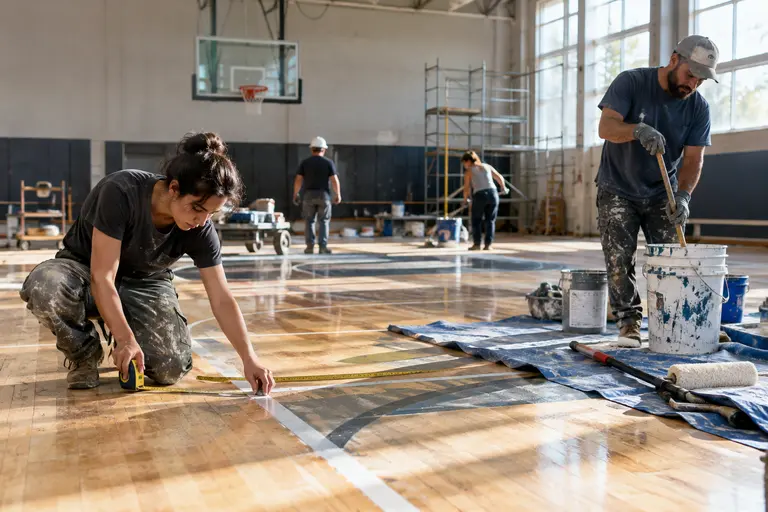
The 2026 examples from around the country show that local sports infrastructure does not follow one model. In Frederick, Maryland, renovations to Nymeo Field at Harry Grove Stadium were completed in May 2026 as part of a $39.1 million project that upgraded clubhouses, batting cages, bullpens, and concourse areas while bringing the site up to MLB Professional Development League standards. In Carroll County, Maryland, Carroll Community College unveiled the $5.6 million James D. Ball Athletic Complex on September 18, 2026, with synthetic turf, an NCAA-standard eight-lane 400-meter track, seating, lighting, and event areas.
In Douglas County, Colorado, leaders approved $7.5 million on August 4, 2026, toward the Gold Crown Field House in Castle Rock. The first phase called for a 75,000-square-foot indoor facility with six basketball courts, space to expand to eight, 12 overlapping volleyball courts, multipurpose rooms, and educational areas. In Kanawha County, West Virginia, leaders announced $7 million in congressional funding on February 19, 2026, for the long-delayed Capital Sports Center, a project planned for a former mall anchor with courts, a gymnasium, fitness space, a walking track, and family entertainment.
| Community | Project Type | Support Model |
|---|---|---|
| Oklahoma City, Oklahoma | Indoor softball practice facility | City bond program |
| Springfield, Massachusetts | Arena upgrades | State investment |
| Casa Grande, Arizona | Multi-sport court | Foundation donation |
| Castle Rock, Colorado | Indoor court facility | County funding after public support |
What Community Support Actually Buys
These projects buy more than square footage. They buy schedule certainty for coaches. They buy safer surfaces for young athletes. They buy better access for families with mobility needs. They buy tournament capacity, which can matter for hotels, restaurants, and local workers. They buy pride, especially in places where a school, team, or recreation center has become one of the few spaces where many parts of town still gather together.
There is also a maintenance lesson here. New facilities need long-term care, not just opening-day attention. Communities that support construction must also ask how staffing, scheduling, cleaning, equipment replacement, and access policies will work after the first season of use. That is where public boards, athletic departments, recreation staffs, and nonprofit partners earn lasting trust.
Why local sports infrastructure Matters Beyond Ribbon Cuttings
The most successful sports facility projects are the ones that still feel useful years after the first ceremony. A court at a nonprofit center can make daily movement easier for members who were previously using a parking-lot hoop. An indoor softball building can help a city serve elite competition while improving the training setting around it. A downtown arena can keep a pro team tied to its community while improving access and comfort for fans.
For Alabama readers, the larger lesson is familiar. Sports places carry local identity. They help define Friday nights, Saturday tournaments, summer camps, senior send-offs, and the quiet work of player development. The recent 2026 projects show that community support is not a side piece of facility enhancement. It is the reason these projects can serve athletes, families, and local economies long after the construction crews leave.