

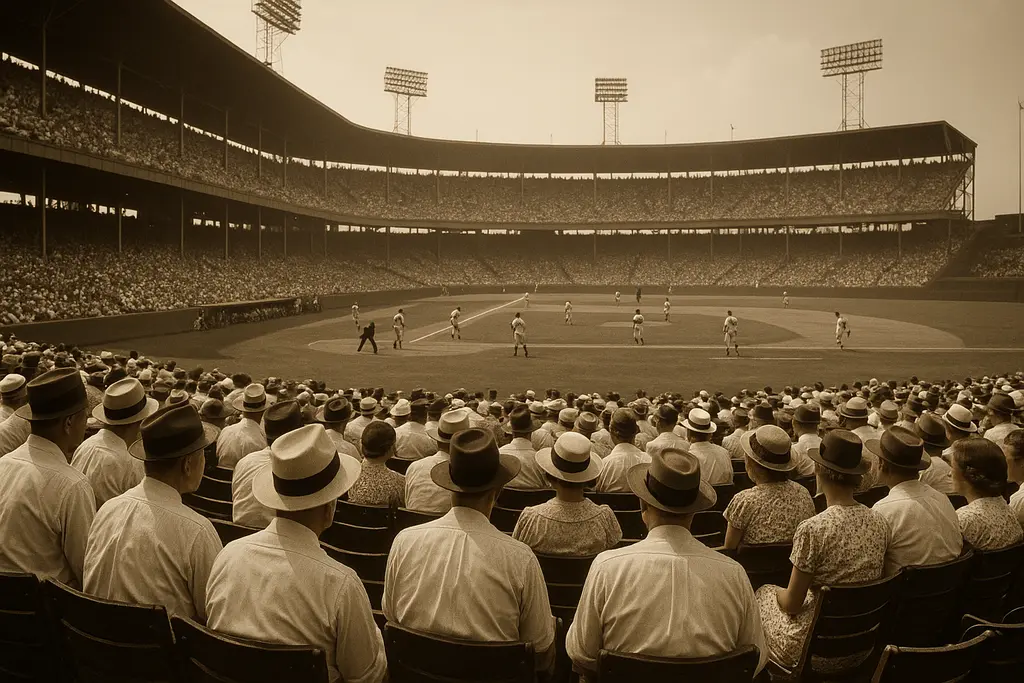
The MLB All-Star Game has always worked best when it feels both ceremonial and competitive. The 2026 edition added another line to that record on July 15, when the American League beat the National League 4-0 in the first shutout in the event since 2013. The AL staff combined for 15 strikeouts, a pitching-led result that gave the Midsummer Classic a modern reference point for dominance, as noted in MLB’s review of recent All-Star moments MLB All-Star review.
For a sports community that values tradition, All-Star memories do not sit in one decade. They stack across generations: Carl Hubbell’s strikeout run in 1934, Ted Williams ending the 1941 game with a walk-off homer, Fred Lynn’s only grand slam in the event, and Cal Ripken Jr. turning his farewell appearance into one more swing worth remembering. The 2026 game belongs in that conversation because it gave pitchers the kind of collective stage usually reserved for sluggers.
MLB All-Star Game Moments That Set The Stage
The Midsummer Classic has never been a normal exhibition. Its best nights carry the feeling of a family photo for baseball: the biggest names in one place, with the sport pausing long enough to mark who matters right now and who still echoes from years past. Some memories come from a single swing. Others come from a pitcher taking command before anyone settles into the evening.
Why 2026 Felt Different
The 2026 American League shutout stands apart because All-Star games are built to showcase offensive names as much as pitching matchups. A 4-0 final, paired with 15 strikeouts, put the emphasis on sequencing, command, and bullpen depth. That kind of result also gave fans a clean comparison point: the first shutout since 2013. In an event where managers often cycle through arms quickly, shared dominance across a staff carries its own weight.
For Alabama baseball families and college fans who follow player development as closely as the scoreboard, that 2026 performance offered a familiar lesson. Big stages can reward power, but they can also reward precision. That same idea drives interest in All-Star Week prospect showcases, where the next wave of talent gets measured against elite competition. Our look at Futures Game history fits that same thread of scouting value and baseball memory.
Recent All-Star Week Turning Points
The last few seasons have delivered a compact run of moments that feel easy to place on a timeline. From a new tiebreaking format to a two-way star changing leagues, the recent games have given fans more than standard highlight reels. They have given the event new talking points without stripping away the old appeal of one pitch, one matchup, or one late swing.
MLB All-Star Game Turning Points Since 2023
The 2023 game brought the National League a long-awaited release. Elias Díaz hit a go-ahead home run, ending a nine-year National League losing streak and earning MVP honors. One year later, Shohei Ohtani made his first All-Star appearance for the National League and hit a 400-foot, three-run home run. In 2025, the swing-off arrived as a tiebreaker, and Kyle Schwarber won it for the National League by homering on all three swings, according to MLB’s recent All-Star account recent MLB moments.
How The Swing-Off Changed The Night
The swing-off matters because it gave the event a new finish without asking fans to sit through an endless string of pitching changes. The format put pressure on a simple baseball act: hitter, pitcher, swing. Schwarber’s three-for-three home run burst in 2025 made the first version memorable right away. It also framed the next year’s shutout in sharper contrast. One year, the finish belonged to raw power. The next, the evening belonged to American League arms.
That back-to-back contrast is why the recent run feels useful for historians. All-Star tradition is not one style of game. It is a rotating record of how baseball chooses its heroes in public. A catcher can become MVP, as Díaz did in 2023. Ohtani can carry global attention with one long drive in 2024. Schwarber can define a new format in 2025. A full pitching staff can own the night in 2026.
Classic Performances That Still Travel

Long before the 2026 shutout, the Midsummer Classic already had a deep set of reference points. The older moments matter because they remain easy to describe in one sentence, which is often the sign of a baseball memory built to last. Hubbell struck out five future Hall of Famers in order. Williams walked it off. Jackson hit one a reported 520 feet. Lynn hit the only grand slam. Ichiro circled the bases on an inside-the-park homer. Ripken homered in his farewell game.
Pitching As Theater
Carl Hubbell’s 1934 stretch remains one of the cleanest examples of All-Star pressure turning into theater. The sequence listed in the research record is startling: Babe Ruth, Lou Gehrig, Jimmie Foxx, Al Simmons, and Joe Cronin went down in succession. That is not just a pitching line. It is a meeting of eras, with one arm moving through a row of names that still sit high in baseball memory.
Pedro Martínez created a modern companion in 1999 by striking out five of the first six batters he faced. His performance led into a 4-1 American League victory and earned him MVP honors. Placed beside the 2026 AL staff effort, Pedro’s night shows how pitching dominance can take more than one form. Sometimes it is one starter burning through an order. Sometimes it is a full staff refusing to let the other league breathe.
Power That Became Baseball Memory
Power has supplied many of the event’s cleanest images. Ted Williams hit the first walk-off home run in All-Star Game history on July 8, 1941, giving the American League a 7-5 win. Reggie Jackson’s 1971 home run was estimated at 520 feet. Fred Lynn hit the only grand slam in the event on July 6, 1983, helping the American League to a 13-3 win. Bo Jackson opened the 1989 game with a leadoff home run, part of an American League 5-3 victory, and earned MVP honors.
Those moments hold special charge for readers across the football-basketball-baseball crossover culture of the South, where two-sport legends are remembered with particular care. Bo’s 1989 leadoff shot is the kind of All-Star memory that travels beyond baseball-only households. Cal Ripken Jr.’s 2001 farewell home run carries a different tone. In his final All-Star appearance, he homered on the first pitch he saw and won MVP honors, giving the night a graceful kind of closure.
Why These Moments Still Shape All-Star Week
The MLB All-Star Game endures because it gives baseball a shared summer archive. Fans may argue over eras, pitching usage, uniforms, or format, but the best plays become common language. A shutout in 2026 does not erase the swing-off in 2025 or Díaz’s 2023 home run. It sits beside them, adding another way for the event to be remembered.
That is why the 2026 result deserves more than a line in a record book. The American League’s 4-0 win gave the modern game a pitching marker, just as Schwarber’s swings gave it a format marker and Ohtani’s blast gave it a star marker. For local fans teaching the game to younger players, these stories are useful because they show that All-Star nights are not reserved for one type of player. The stage can belong to a starter, a reliever, a catcher, a farewell legend, or a hitter who needs only one pitch.
In that sense, the MLB All-Star Game remains less about a single box score than about memory with a scoreboard attached. The 2026 shutout now joins Hubbell, Williams, Lynn, Jackson, Martínez, Ichiro, Ripken, Díaz, Ohtani, and Schwarber in the long conversation that keeps the Midsummer Classic worth revisiting each summer.