

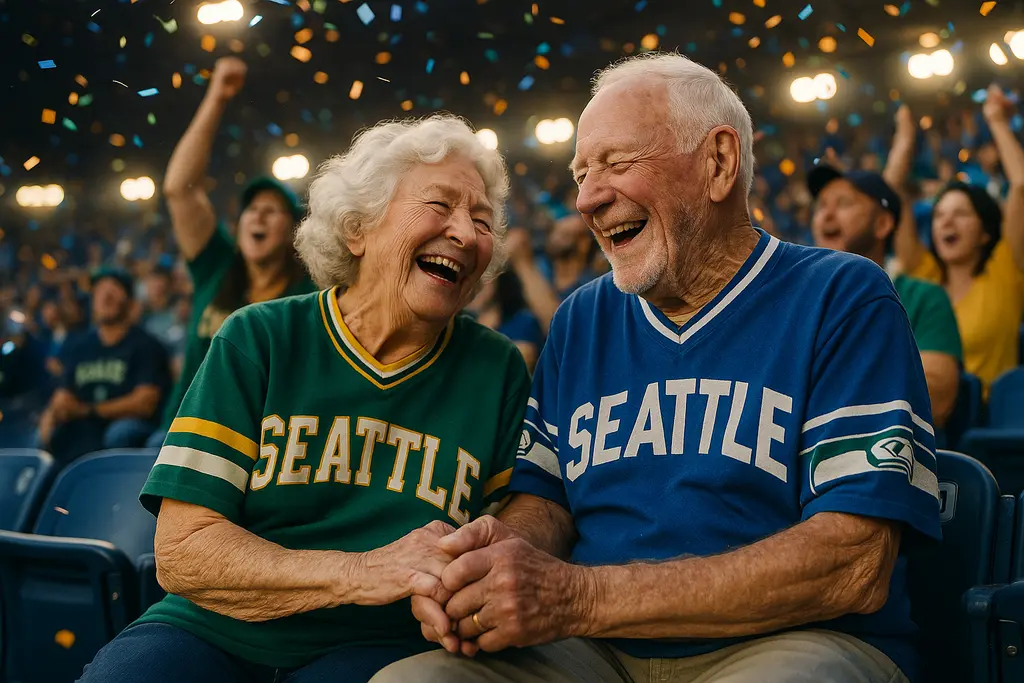
Seattle iconic games have never belonged only to the final score. They live in radio calls repeated by parents, in jerseys pulled from closets for big nights, and in the way a city measures its teams against moments that felt bigger than a standings line. For a sports historian, that kind of memory is familiar: the best local games become shared civic property, passed along by people who remember where they stood, who they called, and how loud the room became.
Why Seattle Iconic Games Travel Across Generations
Seattle Iconic Games And Family Memory
The strongest local sports memories are rarely stored as plain facts. They carry faces, seasons, neighborhoods, and family routines. In Seattle, the same conversation can move from Edgar Martínez in 1995 to Marshawn Lynch in 2011 to Cal Raleigh in 2022 without feeling like a jump across sports. Each moment gave fans a common language. People who follow baseball, football, soccer, basketball, or hockey may not share every schedule, but they understand what it means when one play seems to speak for a city.
That is why Seattle iconic games still carry weight beyond anniversaries. They mark the points where team performance met local belief. The moment may be a walk-off swing, a late defensive play, a championship clincher, or a penalty shootout. What ties them together is the public response. The city remembers not only that a team won, but that the win arrived with pressure, suspense, and a sense that Seattle fans had waited long enough for their turn.
Stadium Sound As Part Of The Story
Seattle’s best-known football moments show how a crowd can become part of the record. The “Beast Quake” on January 8, 2011, came during the NFC Wild Card game, when Marshawn Lynch’s 67-yard touchdown run helped the Seahawks beat the New Orleans Saints 41-36. The play is remembered not only for Lynch’s run, but because the reaction registered seismic activity, a detail preserved in accounts of Seattle sports moments.
Three years later, another defensive snap became part of the same civic memory. On January 19, 2014, Richard Sherman deflected a pass intended for Michael Crabtree in the end zone, leading to an interception that secured the Seahawks’ 23-17 NFC Championship Game victory over the San Francisco 49ers. That play, known as “The Tip,” sent Seattle to Super Bowl XLVIII. For many local fans, those two moments form a bridge between a rowdy underdog edge and a championship standard.
Baseball Nights That Fixed The Calendar
The Double And The 1995 Standard
For Mariners fans, Seattle iconic games often begin with October 8, 1995. Edgar Martínez’s game-winning double in the 11th inning of Game 5 of the American League Division Series scored Ken Griffey Jr. from first base and beat the New York Yankees. The win secured the Mariners’ first playoff series victory. The moment has long been credited with helping save baseball in Seattle, not simply because of the swing, but because the whole scene captured a franchise asking the city to believe.
That play is a reminder of how baseball creates local memory through anticipation. The game had stretched into extra innings. The opponent was the Yankees. Griffey’s sprint from first carried the release of years of frustration. For a city that had seen its teams fight for recognition, “The Double” became more than a highlight. It became a measuring stick for every later Mariners celebration.
The 116th Win And A New Marker
The Mariners added another major marker on October 6, 2001, when they defeated the Texas Rangers 1-0 for their 116th win of the season, tying the MLB record for most wins in a single season, as noted by MLB in its list of T-Mobile Park moments. That kind of regular-season achievement has a different feel than a walk-off playoff play, but it matters in a city’s sports memory because it stretched excellence across six months.
Then came September 30, 2022, when Cal Raleigh hit a walk-off home run that secured the Mariners’ place in the postseason and ended what was then the longest playoff drought in American sports. It did not erase the tension of the drought; it gave that tension a release point. For readers weighing how those Mariners memories carry into the club’s next stage, our look at Mariners rivalries and young talent connects past pressure with the next wave of expectations.
Football Plays That Shaped A Civic Voice
From Beast Quake To The Tip
The Seahawks’ rise gave Seattle fans football moments with a hard edge. The Beast Quake was individual will made public. Lynch broke tackles, kept his balance, and turned a playoff run into a phrase that still needs little explanation in the region. The Tip was different: one perfectly timed defensive play at the edge of the end zone, in a rivalry setting, with a Super Bowl trip at stake. Together, they gave Seahawks fans a pair of shorthand memories for physical identity and late-game nerve.
On February 2, 2014, the Seahawks defeated the Denver Broncos 43-8 in Super Bowl XLVIII, giving the franchise its first Super Bowl championship. That result sits at the center of the club’s modern identity. Fans often remember the score because it was so decisive, but the deeper local meaning comes from what surrounded it: years of noise, roster belief, and the feeling that Seattle football had reached the sport’s biggest stage without softening its personality.
Why Defensive Moments Matter Locally
Not every city builds its football memory around defense, but Seattle’s championship period made defensive confidence part of the fan voice. Sherman’s deflection in the NFC Championship Game did more than end a drive. It froze a rivalry moment in place. For local supporters, plays like that become teaching tools. Younger fans learn why a matchup mattered. Older fans explain the stakes. The play keeps its force because it came with context: a narrow lead, a rival opponent, and a season hanging in the air.
Championships Across Courts, Ice And Soccer

Basketball Titles And A City’s Standard
Seattle’s basketball memory includes two championship pillars separated by a quarter century. On June 1, 1979, the SuperSonics clinched their first and only NBA championship by defeating the Washington Bullets in Game 5 of the Finals. In 2004, the Seattle Storm won their first WNBA championship by defeating the Connecticut Sun in the Finals, bringing Seattle its first professional basketball title since 1979. Those facts matter because they show how a city can hold more than one basketball tradition at once.
The Sonics’ 1979 title remains part of local sports identity, even as the franchise’s absence has changed how fans talk about the NBA. The Storm’s 2004 championship gave a new generation a basketball title to claim in real time. Both moments belong in the same conversation because they show continuity: Seattle basketball fans have celebrated champions in different eras, with different leagues and different stars, but with a shared sense of civic ownership.
Sounders And Metropolitans In The Larger Seattle Story
Seattle’s championship memory is not limited to the major men’s leagues most often discussed nationally. On December 10, 2016, Seattle Sounders FC won their first MLS Cup by defeating Toronto FC in a penalty shootout. The manner of the win matters. A shootout asks fans to absorb every kick, every pause, every turn in pressure. That kind of finish creates a public memory because it slows time down and forces an entire fanbase to breathe together.
The city’s hockey past reaches even farther back. In 1917, the Seattle Metropolitans became the first American team to win the Stanley Cup by defeating the Montreal Canadiens. For local sports culture, that detail broadens the timeline. Seattle’s championship story did not start with one modern franchise. It stretches across eras, venues, and sports, giving fans a longer inheritance than many outside the region may realize.
Why Seattle Iconic Games Still Set The Local Standard
The power of Seattle iconic games comes from how they help fans sort memory. A city does not need every season to end with a title for sports to matter. It needs moments that people can return to with accuracy and feeling. The Double gave Mariners fans a baseball identity. The 116th win showed sustained excellence. Beast Quake and The Tip defined a football era. The Seahawks’ Super Bowl XLVIII victory gave that era its championship seal. The Sonics, Storm, Sounders, and Metropolitans added their own place in the city’s wider record.
For local fanbases, those games are not museum pieces. They shape how people watch the next late inning, the next fourth quarter, the next shootout, and the next clinching game. Seattle iconic games remain alive because they set a standard for what a team can mean to its community: shared pressure, shared release, and a story worth handing to the next fan in line.