

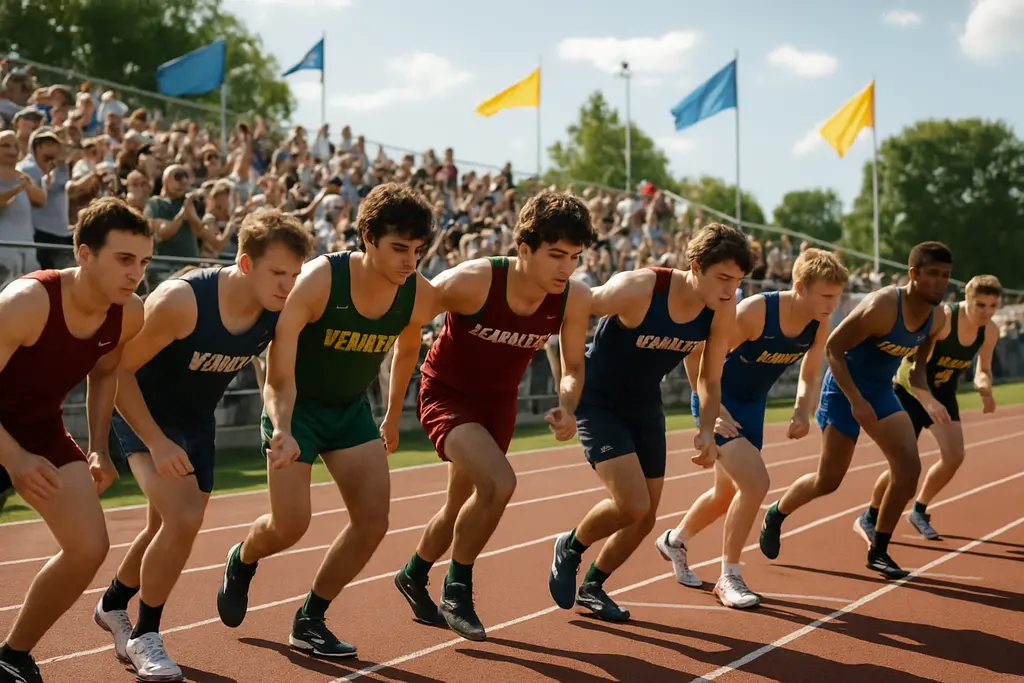
The Patriot Games gave Geneva, Ohio, a championship-style moment that felt bigger than a three-day youth competition. Held at SPIRE Academy from August 9-11, 2026, the inaugural event placed high school athletes, local volunteers, families, and a large multi-sport campus in the same spotlight. For a community that has built part of its sports identity around hosting and developing athletes, the event showed how facility development can carry meaning beyond buildings, fields, and courts.
Patriot Games And SPIRE’s Championship Stage
Why The Patriot Games Fit Geneva
The Patriot Games were organized by Freedom 250 as part of the United States semiquincentennial celebration, with one male and one female high school athlete, ages 14-17, selected from every U.S. state, territory, and tribal nation to compete at SPIRE Academy in Geneva, according to the official event page. That structure gave the competition a national reach while keeping the host story firmly rooted in Northeast Ohio.
Championship events often reveal what a facility can truly handle. A venue can look impressive on paper, but the pressure of athletes moving between events, spectators finding their way around campus, staff coordinating equipment, and volunteers supporting operations is where prestige is earned. SPIRE’s role as host placed Geneva in that demanding position, and the event became a public measure of how a local sports campus could support a national youth competition.
A Format Built Around Athlete Versatility
The event was not built around a single sport or a narrow skill set. Research notes from the official event materials described a broad competition format that included strength, speed, endurance, and agility tests, along with team sports and obstacle-style challenges. That mattered because it asked young athletes to compete as complete competitors, not just specialists.
- Speed, strength, endurance, and agility testing placed individual athletic traits under pressure.
- Team games such as kickball, dodgeball, and tug-of-war rewarded communication and competitive response.
- Bootcamp-style circuits and obstacle courses tested stamina, coordination, and composure.
- Exercises inspired by the Presidential Fitness Test linked the event to a familiar American athletic benchmark.
That kind of structure fits a championship conversation because it honors more than a final score. In basketball, the best programs often value conditioning, adaptability, and poise as much as scoring touch. The same principle applied here. The athletes who stood out had to respond across multiple tests, which made the format a meaningful showcase for player development and mental toughness.
Facility Development And Community Prestige
What SPIRE Could Host At Scale
SPIRE Academy’s facility profile helped explain why Geneva could host an event with so many moving parts. The campus covers 800 acres and includes 850,000 square feet of indoor space, along with outdoor fields and an Olympic-size aquatics center, according to SPIRE’s event overview. Those numbers are not just real estate details. They describe the type of sports infrastructure needed when an event asks young athletes to move through different competitive stations and when families, volunteers, and spectators need a workable event footprint.
Facility development events carry prestige because they prove capacity in public. A tournament, showcase, or championship can strengthen a venue’s reputation only if operations match ambition. For SPIRE, the event offered a live demonstration of multi-sport capability. Indoor space, fields, aquatics resources, and campus acreage gave organizers options, which is one reason large facilities can compete for events that smaller single-sport venues cannot support.
Local Pride Beyond The Scoreboard
Community prestige is not measured only by trophies. It also shows up in how a place presents itself when visitors arrive. Research notes described hundreds of volunteers, thousands of spectators, involvement from nearby townships, 600 flags across campus, and a new 150-foot flagpole. Those details belong in the sports story because championships depend on communities as much as venues. A facility may host the event, but the town helps carry the experience.
Geneva’s role matters because many young athletes remember the place where they competed as much as the results. Families remember parking, hospitality, wayfinding, volunteer help, food stops, and the way a town treats visitors. Local businesses can feel the difference when a national event brings families into hotels, restaurants, and shops. The research notes state that SPIRE had already contributed at least $50 million annually to the local economy before this event through tournaments, academy activity, lodging, and visitor spending. While that figure came from the provided research rather than the two cited official event pages, it fits the broader point: sports facilities can become anchor assets for a local economy when they host events with reach.
Scholarships, Visibility, And Athlete Development

College Funding Raised The Stakes
The Patriot Games were tied to a $250,000 prize scholarship pool, split evenly between the male and female champions at $125,000 each, according to the research notes. That detail gave the event a serious development angle. Scholarship money changes the meaning of a competition for a high school athlete and a family. It connects performance to college opportunity, which is one of the most powerful ways sports can support young people beyond the final whistle.
That balance between competition and education has long shaped the best local sports stories. A community facility becomes more valuable when it does not merely host games but helps create pathways. For some athletes, exposure can lead to confidence, contacts, or future recruiting conversations. For others, the event can become a defining memory that raises personal standards. Either way, the scholarship model made the competition about preparation, discipline, and long-term possibility.
National Attention With A Local Address
The event also carried a visibility piece. The research notes state that competition streamed live on the ESPN App and that a one-hour primetime special on ABC was scheduled for August 13, 2026. Since that date has passed as of October 22, 2026, the broadcast window belongs to the event’s completed media footprint, not to future planning. For Geneva, the key point is that national attention was tied directly to a local venue.
That matters in championship history. Venues gain standing when they host events that people outside the region recognize. The great basketball gyms, college arenas, and postseason sites become part of sports memory because performances happened there under pressure. SPIRE’s event gave Geneva a similar kind of marker, even though the competition format was broader than one sport. It placed the facility in a national youth athletics conversation while still keeping the local community at the center of the story.
What The Patriot Games Mean For Geneva Sports
A Facility Event With Championship Lessons
The Patriot Games showed that facility development is not just construction; it is a sports strategy. The event required space, planning, staffing, athlete services, spectator flow, and community support. Those are the same ingredients that decide whether a venue can host championships with credibility. For local athletes, that kind of infrastructure can raise expectations. For families, it can make elite competition feel closer to home. For Geneva, it reinforced that a facility with scale can help define a town’s sports reputation.
There was also scrutiny, according to the research notes, including concerns over athlete selection, political messaging, and representation. That should not be brushed aside. Prestige brings attention, and attention brings questions. Strong sports communities respond by protecting fairness, communicating clearly, and keeping athletes at the center. The best championship hosts understand that public trust is part of the event operation.
The lasting significance is straightforward: the Patriot Games gave SPIRE and Geneva a completed case study in how a facility can host, promote, and support a national youth competition. It blended athlete development, scholarship opportunity, facility capacity, and community pride. In a region where sports stories often grow from high school gyms, local fields, and family travel weekends, that blend matters. Championship prestige is not handed to a community. It is built through events that bring people together, test athletes honestly, and leave the host city with a stronger sense of what it can carry next.